In Conversation with Robert Anderson Plimer
Dr. R. A. Plimer (Bob) was born in Edinburgh. Then, after a short stay in Egypt, he went to school in the city before moving to Kelso in the Scottish Borders. Bob’s degrees and postgraduate studies include Classics and Ancient History & Languages, Philosophy, Metaphysics and Philosophy of Mind. Bob taught for over 20 years in Classics, Ancient History, Archaeology, Ancient Languages, Philosophy and Religious Studies and which added to his already growing magical interests.
As a speaker, Bob, has lectured at most occult conferences both in the UK and abroad, and still runs monthly lectures at the Phoenix Club on the Isle of Wight. Discussions focus on various Occult subjects including Egyptian skrying techniques, Classical Magick, Hermeticism, Neoplatonism, the Grimoire tradition, Esoteric symbolism and astrosophy, ancient and modern Alchemical theoria et praxis along with the individuals who have inspired the promotion of the Magical Revival.
Bob’s published works include:
A Four Volume series on Hermetic Philosophy;
Spagyric work in Decoding Alchemy
Mineral Alchemy and Skrying in The Alchemical World of Edward Kelley - Theatrum Astronomiae Terrestris
The Philosopher’s Net – At the Still Point of the Turning World.
His best-selling Night of Pan is a commentary on Crowley’s Book of Lies, the Thoth Tarot and initiation in the A∴A∴
Bob’s most recent works include an Ophidian trilogy based on the hieroglyphs and iconography from the Middle Egyptian and late Demotic texts relating to magical techniques involving skrying praxis and the training of the magician (swnw-t).
Vol.1 The Flesh of Re;
Vol.2 The Chamber of Darkness
Vol.3 The Limbs of the Duat.
Bob’s latest work is an in-depth study based on Mithraic Soteriology – Souls, Blood, Bones & Flesh. He has over the years also contributed articles to several well-known esoteric journals. At present, Bob is working on a new project based on a magical interpretation of the so-called ‘Book of Two Ways’ from the Middle Egyptian coffin text spells.
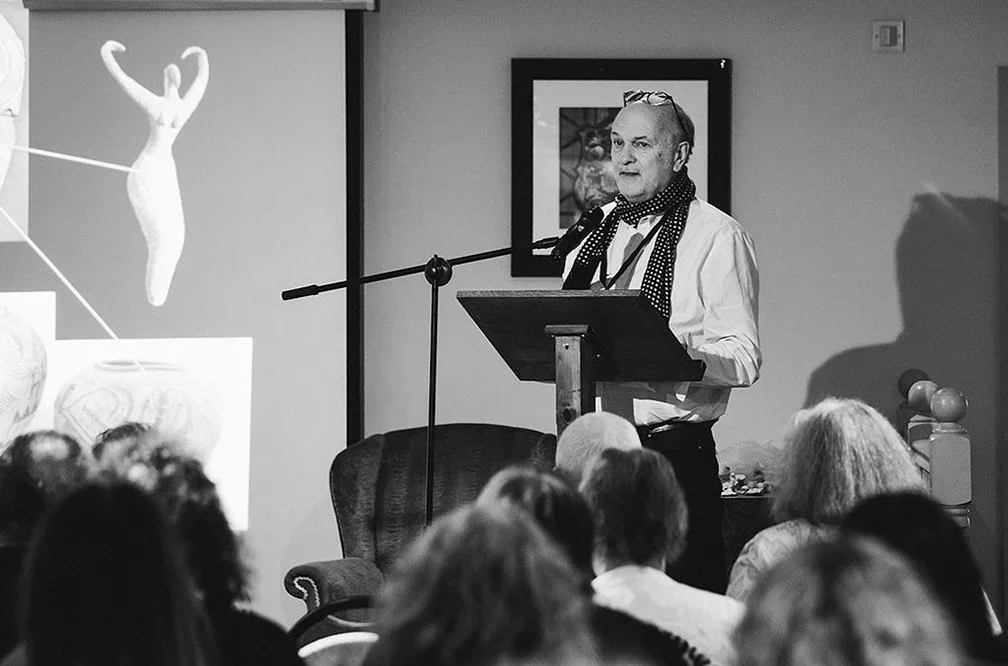
Dr. Robert Anderson Plimer
OL: Hello Bob. Thank you for taking the time to have this conversation today. We look forward to your insights. Going back to your early life, you grew up in Scotland but, as you’ve mentioned, spent a deal of time in Egypt. These are starkly different landscapes and cultural spaces. How did this juxtaposition inform your work? Was this an inroad for you in dealing with the work of folks like Kenneth Grant – a British figure similarly concerned with Egyptian practices?
RP: Good morning, yes, as a young boy, I spent a few years in Egypt with my father before coming back to school Edinburgh (where I was mostly interested in ancient languages and history, visiting the National museum every Sunday). The landscape and psychogeography of both Ismailia in Egypt and Edinburgh are indeed very different, however, both hold powerful energies with regards to their past.
In Egypt it was my father who as well as being in the military had a practical interest in alchemy, and wherein Ismailia I was introduced to practical alchemy where I was also taken round the more famous sites in Egypt (Lower and Upper). I remember being totally overwhelmed by Egyptian history and it theosophical power — although, at that time I couldn’t read hieroglyphics nor fully understood the complexity of their ancient theosophical development. When we returned to Edinburgh, my father worked in the aptly named ‘Salamander Street’ in Leith (Edinburgh’s port) where he was a blacksmith, designer/maker and installer of fire-escapes (e.g. Edinburgh’s Blind School).
I remember as a young boy, being silently inducted into the alchemical furnace and where after the room was cleared (no dust), I was lucky enough to witness not only the pouring of gold but certain other mineral alchemical operations — that at the time I understood very little. It was from my mother’s side, that I would gain most ‘spiritual’ insight into the Astrum Argenteum, Rosicrucianism (which I would later join), Freemasonry, and the Orange Order. So, Egypt, Greece and the Mediterranean would eventually provide me with the interests in studying ancient languages and history and which I would and continue to work on throughout my life and where from my mother’s side would develop a keen interest in the theosophical, philosophical and initiatory relevance in the world of Magick. Therefore, both from my father’s practical and mother’s more theoretical side I would focus my own studies on both!
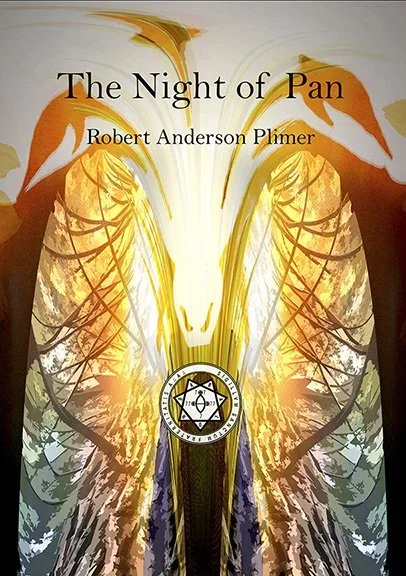
Plimer’s work entitled, The Night of Pan, contains an analysis of the Magical and Mystical activation of the Ophidian Current.
OL: Later, you engaged academic pursuits in topics like classics and history, but also philosophy. These pursuits no doubt helped form the bedrock of your work, yet often the cultures of the academy can resist and ‘bump up against’ occult experience. How were you able to reconcile any of these tensions?
RP: Indeed, there is somewhat of a dichotomy between the academic and occult worlds, but like Jung’s Faustus/Philemon, one works to balance these and make use of the Hermetic axiom that ‘All is One’… This would eventually point me in the direction of ascertaining the origins of our magical Kosmos, and which as you say was mostly worked out in my Hermetic, Egyptian, and Mithraic soteriological studies and books. Funnily, enough, this theme can be found outworked in all my studies both philosophical and indeed magical.
OL: While you write quite prolifically, you also embed yourself in occult communities by lecturing and engaging groups. For example, you present monthly lectures at the Phoenix Club on the Isle of Wight. This month (October), you gave a lecture entitled “Understanding the Language and Magick of Metaphor and Symbol.” What was the genesis of this series, and how does it nourish you in a community context?
RP: Our monthly Phoenix club lectures have covered most esoteric subjects, but I still find it a bit of a challenge to come up with new areas of magical and esoteric study… even although, the Phoenix club has been going now for over 17 years. All of my lectures here are geared towards introducing members to the occult and, where possible, magical praxeis and meaning.
OL: With this considered, it seems that the continued prevalence of occult communities, conferences, publishing efforts, and explorations in the 21st century speak to a certain ongoing impulse. It can seemingly be mapped to what Kenenth Grant termed the Magickal Revival – a topic you’ve spoken of at length. What do you make of this point, and what observations have you noted about the refusal of occult experience to subside in this century?
RP: The works of Kennet Grant and the Ordo Typhonis have in general paved the way for modern esotericists and the importance of esoteric creativity in one’s magical life. Grant’s work for example, involves a deep understanding not only of Crowley and Spare, but also deep Western/Indian philosophical, psychological, and magical arguments that engage the magician literally from the phenomenal to noumenal as in creative forms. Hence, although Grant doesn’t specifically mention Egyptian Hermeticism it does nonetheless figure at the root of his system and indeed the so-called Magical Revival – it’s a question of roots again, therefore, my own studies in those areas.
As far as magical ‘experience’ goes, it is when one understands how to deal with the subconscious as in Grant and Spare’s use of atavistic resurgence – this is through the magical method of dislimning, and indeed leads to skrying praxeis. These are exactly what the Egyptian swnw(t) — magician, healer and seer — had to learn in per-ankh (the House of Life) — literally taking a hieroglyph (Grant’s oldest sigils), an ikon or physical object and then reducing it in the mind (Akh) to its Form (Ki) that could then be projected into at-keki (the chamber of darkness/the subconscious), and then by creating the form of the mehen serpent-barque (with the invoked forms of Heka and Sia) one then magically sails through the interstitial desert (zemit — cf. the kabbalistic abyss) and on into the limbs of the Duat into the beyond (shetit)
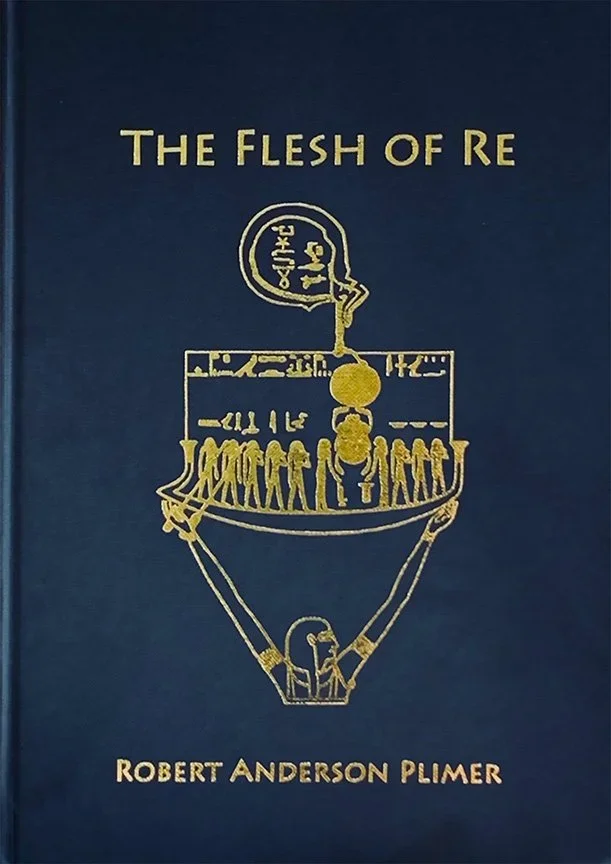
Plimer’s 1st volume of his Egyptian Trilogy, entitled: The Flesh of Re
…this is a purely magical operation from the corporeality of subject/objects into the noetic forms of phenomena in the Mind/Soul (Akh/nous and Ba/psyche). The magick therefore becomes a question of the individual’s understanding of their own being (ontos), hence that of their goal (telos), involving the mind/soul (nous/psyche) in being saved (soteria).
OL: Your published works through Black Lodge Publishing span many topics, from Hermetics, spagyrics, Crowleyana, Egyptian practice, the Ophidian Current, and so forth. Yet, there seems to be a tie that binds these works cohesively. What do you identify as that tie? Perhaps it is related to the so-called “Golden Thread” of occult transmission uniting practices and outlooks?
RP: As I said above, all of my works deal with deep rooted Mind, Soul and Body problems on an esoteric and magical level – and if an individual practitioner does not engage on a personal level they will then find it hard to initiate any direct path towards a conclusion (hence the relevance of initiations); indeed, the way, is sometimes labyrinthine especially as one strives to engage in one’s own magnum opus.
Therefore, my Ophidian Trilogy draws upon Late Egyptian and Demotic modes of magical transmission through hieroglyphs, ikons, and other means of encoding knowledge through traditional magical initiatory structures. My Mithraic book is also based on philosophical and magical iconography and texts that were historically much later than the Egyptian materials, but do nevertheless contain the same questions and answers that the Egyptians, Greek philosophy the and Hermeticists had asked.
These works therefore serve as an outworking of my earliest magical experiences and education and where questions about origins, Alchemy, Hermeticism, Magick and philosophy; and which as such, are exactly what the Magical Revival (including the Renaissance) and indeed one’s theoria et praxis should still aim at today.
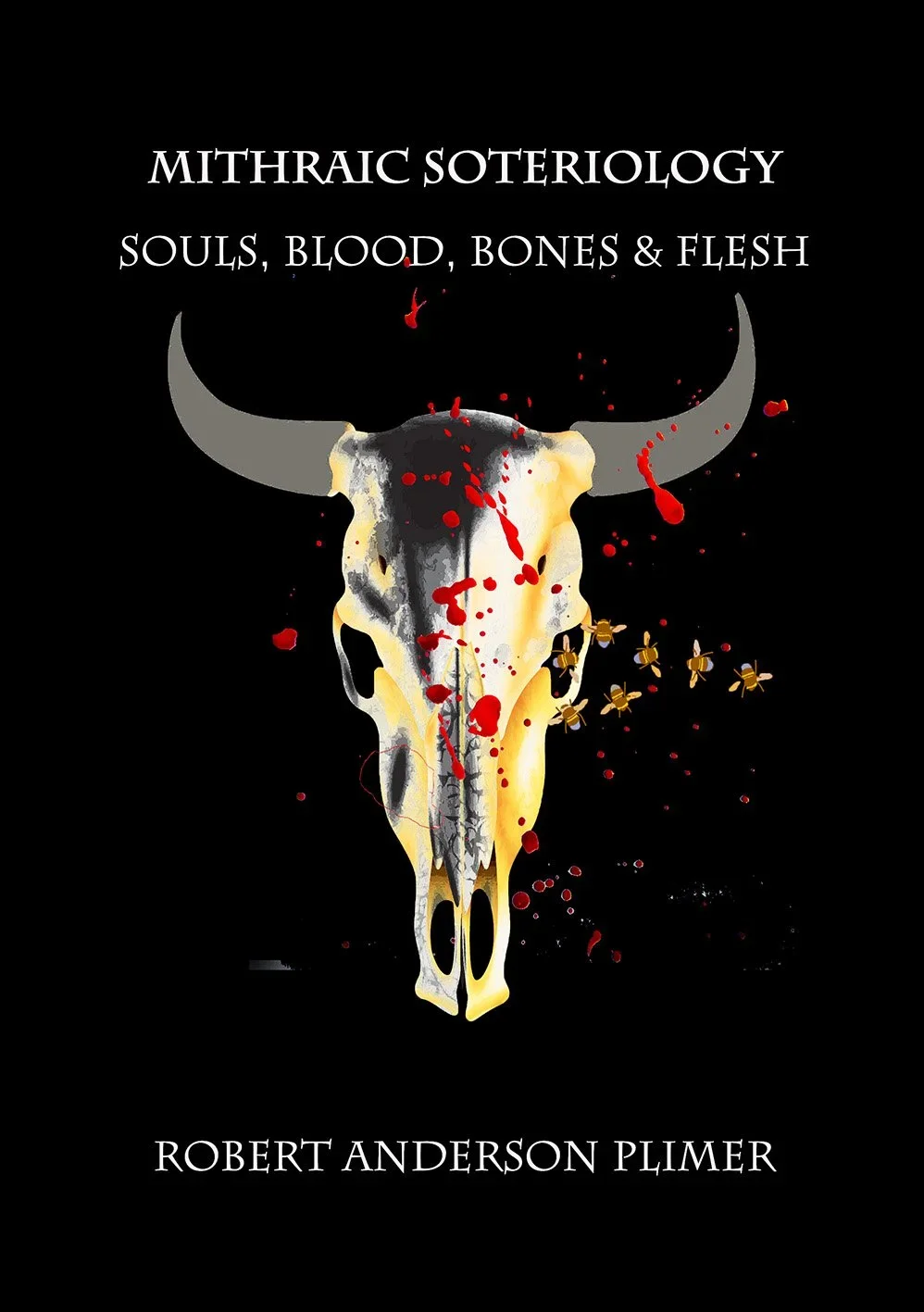
Plimer’s work entitled, Mithraic Soteriology: Souls, Blood, Bones & Flesh
OL: Finally, Bob, related to an earlier question, how has lived occult experience distinctly informed your writing voice, in particular. Do you variously find joy, tension, or frustration when balancing scholarly foundations with the expressions of occult life?
RP: Luckily, my time is spent researching, reading and writing — always preparing for future occult conferences, lectures and indeed the Phoenix Club. I must admit that at present my work is split between the Egyptian Coffin Texts and the Faust conundrum?!
OL: Bob, we are very grateful for your time today. We wish you the best of luck with your ongoing efforts and explorations. Until next time!
RP: Thank you so much for the opportunity to revisit my past…
We are grateful for the opportunity to speak with Bob, and for the insights gleaned. Bob’s work, including the texts mentioned above, can be found at: