
The Martyrdom of St Cyprian
In the 5th century Aelia Eudocia, the Empress of Byzantium, composed an epic poem on the crimes and salvation of Cyprian, a professional magician who is presented as the embodiment of everything a magician can be, who ran up against a devout teen in Antioch.

The Little Book of Life After Death
Gustav Fechner (1881 - 1887) was a pioneer in the emerging field of scientific psychology and the philosophy of mind, but like many of his peers, he also applied his intellect to the question of the survival of the human personality after death.

It is Joy To Be With You
Emily Dickinson, unrecognized in her own time, is known posthumously for her innovative use of form and syntax.


The Flowers of Evil
Baudelaire’s most famous poetical effort is the result of a slow and immersed work. The poems focus is on death, of disease, of prostitution, of the ordinary street life of Paris, of everything that shed light or spoke to humanity.

Enchiridion Leonis Papae
When Marie Bosse was arrested in Paris, in January 1679, among her possessions was a copy of an unusual magical text. The Enchiridion Leonis Papae — Pope Leo's Handbook — has since acquired notoriety as a work of 'black magic', largely due to its association with the subsequent 'Affair of the Poisons', and the aura it acquired among 19th-century occult revivalists.

Emblemata
Alciato was a jurist and writer, born in Milan in 1492, he is the founder of the school of legal humanists, but his most famous work remains the Emblemata, first published in 1531. This emblem book combines Latin verses with accompanying woodcuts creating a new genre that reached enormous popularity.

The Dream God
The peculiar and startling effect of morphine on a person unaccustomed to its administration was happily illustrated in the instance of a gentleman to whom, under its influence (about three-eighths of a grain,) the dream to be related occurred.

Der Totentanz
The evocative work of Hans Holbein, known as Der Totentanz or The Dance of Death, stands as a testament to artistic mastery and social commentary.


The Cloud of Unknowing
The Cloud of Unknowing is a pillar of medieval mystic writing, written as a 'how to' guide for a first-hand encounter with God.
The approach is surprisingly ecumenical, with the author recommending that all that the candidate thinks he or she knows about God to be discarded before any attempt can made at the described exercise.

The Castle of Otranto
"The Castle of Otranto," written by Horace Walpole in 1764, is often regarded as the first Gothic novel. Its initial edition claimed to be a translation of a 1529 Naples manuscript found in the library of an ancient Catholic family in northern England.

The Black Pullet
Dismissed by A.E. Waite as the probable work of mischievous priests in Rome, The Black Pullet is a ‘novella of ideas’ grounded in the Egyptomania that gripped France in the 1820s.

A Season in Hell
A Season in Hell is an extended poem in prose written and published in 1873 by French writer Arthur Rimbaud.
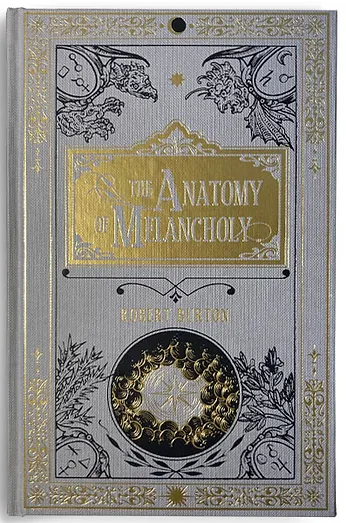
Anatomy of Melancholy
This compelling and occasionally comic study of melancholy became cult reading in the 17th century and has inspired artists from Keats (who said it was his favourite book) over Cy Twombly to Nick Cave." Robert McCrum, The GuardianThe Anatomy of Melancholy was first published in 1621.

Old Tradition Crafte
Old Tradition Crafte presents authentic Witchcrafte of Scottish and English origin. The practices and rituals herein date upto and beyond the era of Dr. John Fian’s demise at the hands of the Inquisitors and King James VI, in 1591.

De Virtutibus Lapidum: The Virtue of Stones
The luster from the blend of historical curiosity and the power of stones create a unique tone and brilliant insight into the diverse magickal/ritual and healing uses of gemstones. Fifty gemstones are mentioned.

The Mystery of Man
Widely believed to have been the real-life inspiration behind the protagonist of The Secrets of Doctor Taverner by Dion Fortune, Theodore Moriarty was a mysterious figure who practiced alternative healing and taught a small circle of students until his untimely death in 1923.

The Book of Flesh and Feather
A truly spellbinding work, The Book of Flesh and Feather is the central liturgical and ritual book of a devoted group of initiates of the Great Djehuty.