In Conversation with Benjamin A. Vierling
This past month, The Occult Library was delighted to speak with painter & illustrator Benjamin A. Vierling about a number of unique topics; from the dynamic painting media of Mischtechnik, to diverse strands of formative influence in the works of Dürer, Memling, Fuchs, Redon, and others, to notable work with occult authors. Benjamin also remarks on the responsibility and privilege of enacting artistic life within a greater, embedded context of culture and community. We hope you will enjoy this unique conversation.
OL: We’d like to begin by noting your utilization of the 15th century Mischtechnik of painting. First, what is your personal experience of utilizing such an old, formerly obscured, and later resurrected technique? Do you find that drawing on this form connects you to an older, or distinctly different, stratum of focus & insight while you’re carrying out your work in the atelier?
BV: The so-named Mischtechnik can be discussed by way of numerous angles, including the technical procedure, the historical usage, and the allegorical implications. I have been working with the method for some decades now, and this process of creation has permeated everything that I do in the studio, even when utilizing other media. To clarify what the term refers to; misch simply means ‘mixed’ in the german language, and in this context the media being commingled on the panel are egg tempera paint, and oil paint, which is derived from pressed linseeds. Egg tempera is water based, which of course does not meld naturally with oil. Because of the inherent chemical incompatibilities between the two mediums, careful layering procedures must be implemented. Tempera dries within hours, while oil requires many days, even weeks, to stabilize. In bringing a composition to life, considerable planning and painstaking methodology in construction are necessitated. This involves accommodating for drying times between layers, establishing the structures and their tonal value before incorporating color, and other procedural steps of production. It is this interplay between media, the brittle opaque tempera pigment versus the fluid opacity of the oil medium, that conveys unrivaled nuances of form and light as they dance with one another on the panel.
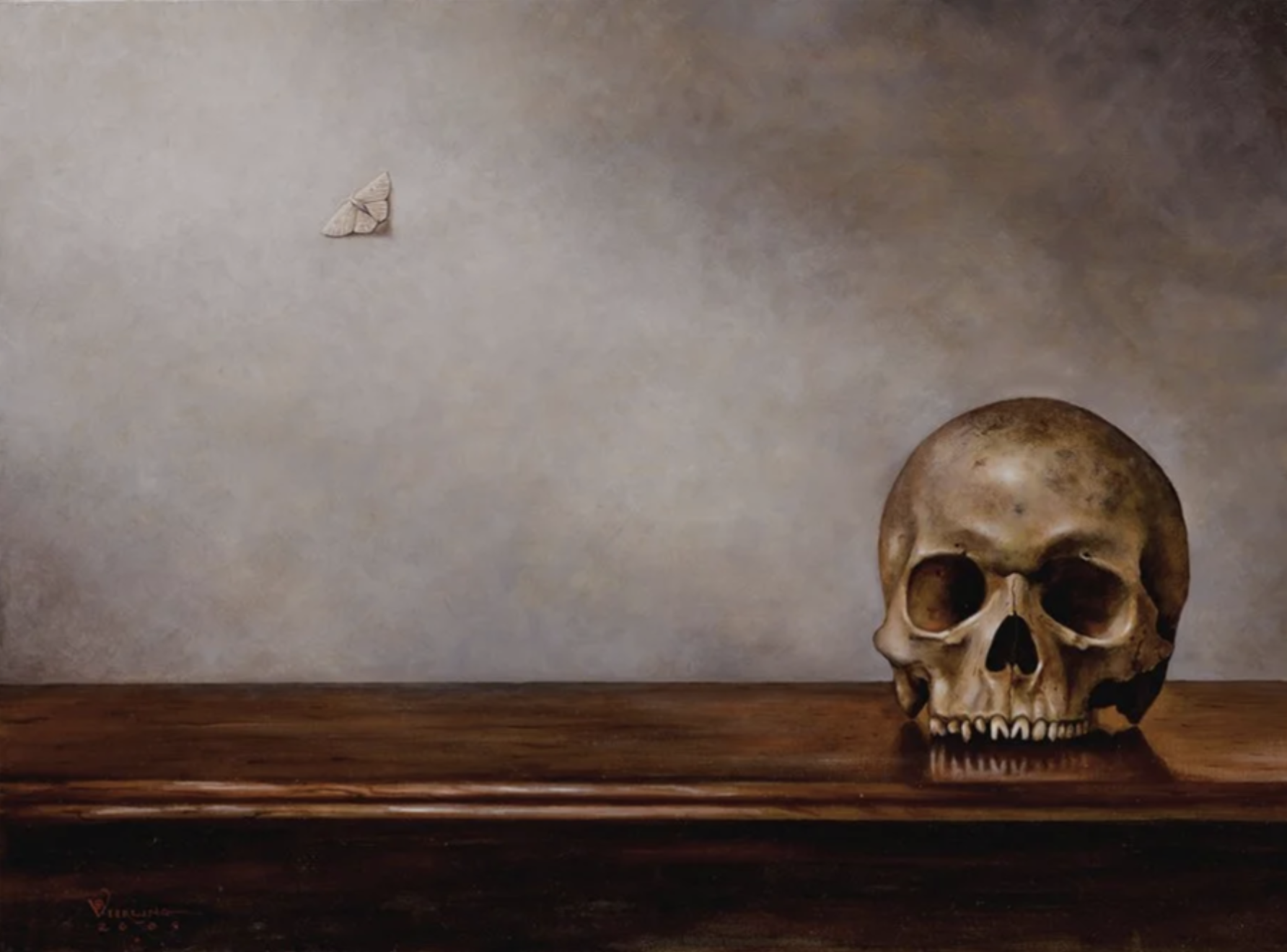
Memento Mori. Egg Tempera & Oil on canvas. 24” x 18”. 2008.
To provide some background on my discovery of the technique, I was initially drawn to it because of my great admiration of early Renaissance painting, specifically the works of Dürer, Cranach, Memling, van Eyck, van der Wyden, Breugel, Holbein, and other northern european Masters of the craft. In studying the meticulously executed images from that epoch, I wanted to understand how such a perfect balance between ambient luminosity and intricate rendering might be achieved. Paintings from that era are still imbued with the structural abstraction of the late Medieval period, mythical and iconographic, yet they impart a warmth of realism, expressing the depth and subtlety of a more naturalistic interpretation. It was this conjunction of influences that inspired me, a query that ultimately led me to the Mischtechnik.
It’s an open debate as to what extent all of the aforementioned renaissance painters actually used a specific ‘Mischtechnik’ combination of egg tempera and oil paint, at least as the methods are typically studied today. Painters in our time, even when they endeavor to be purists, have access to pigments and chemicals that simply were not available in that era. Dissecting the exact recipes used will further vary widely. Nevertheless, in reviewing the works of the Flemish, German, and Italian masters of the Fifteenth century, it’s clear that these painters were still leaning heavily on the structural methods of medieval tempera painting to build out their compositions, with the oil glazes constituting the final colorization effects. This seems evident even when forensic analysis of period works may not specifically reveal a tempera underpainting, but rather an oil based foundation that mimics the original method. In certain cases, such as with a series of Memling portraits I was fortunate to be able to study in person, extensive analysis has been done, and this process of layering seems to have been confirmed. Structurally, the hallmarks of the method involve a monochrome underpainting, followed by innumerable color glazes, with reworking and compositional adjustments made throughout the process. The final result is an unparalleled manifestation of luminously colored forms, exquisitely rendered.
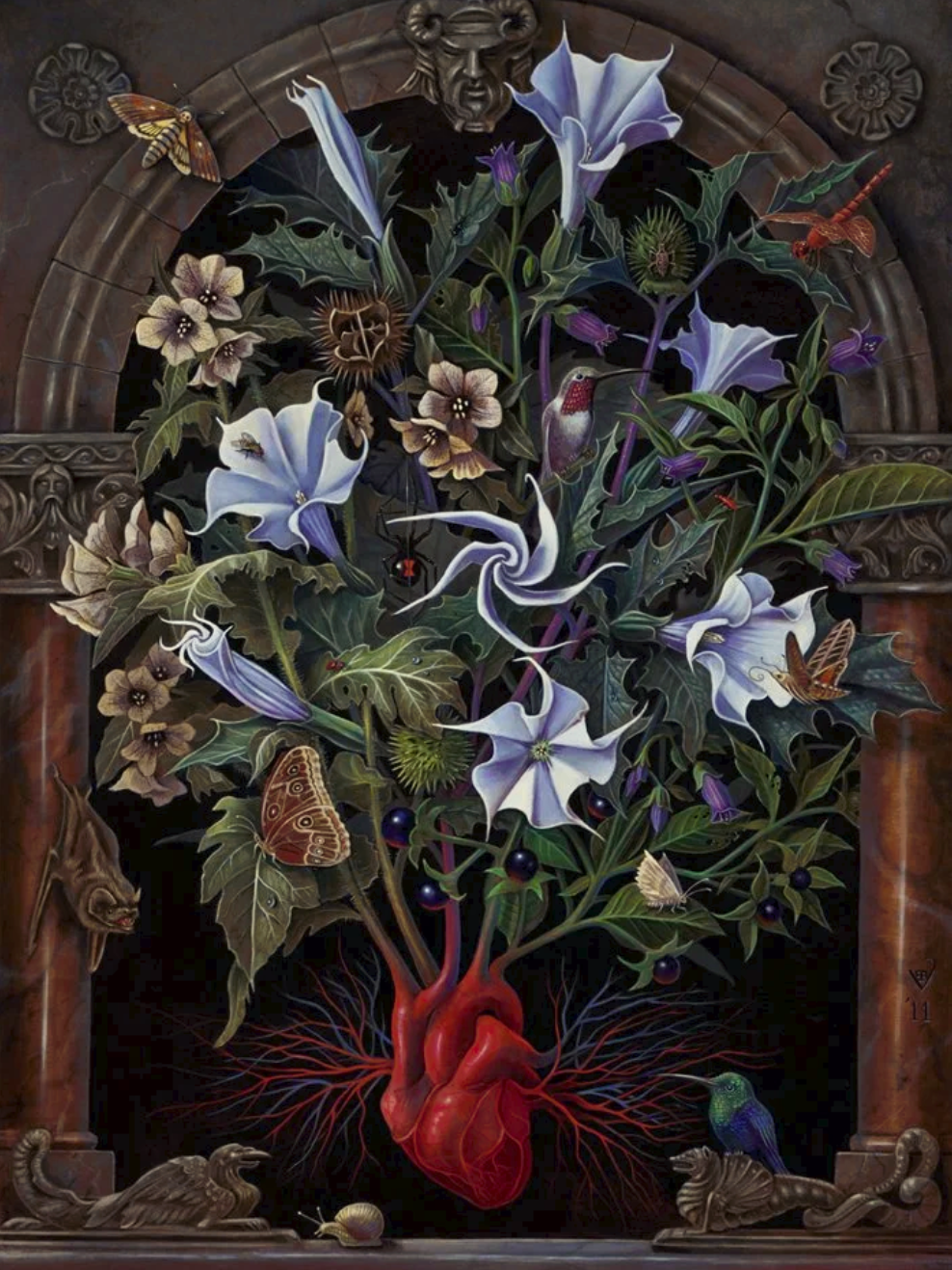
Sacred Heart. Egg Tempera & Oil on panel. 18” x 24”. 2011.
In working with these techniques over time, the methodology has come to inform how I approach image-craft, even when producing pictures in alternate media, such as an ink drawing, or a polymer-based painting. One begins to think architecturally, drafting conceptual blueprints before embarking on the actual construction. The image is built, rising up in multiple levels out of a carefully laid foundation. Peculiarities of color, light, and tone are draped like a mantle on the established structure. It’s only when the forms are anchored and substantiated that the ornamental flourishes are finally rendered and refined. I liken the whole process to manufacturing a complex edifice that one can explore and inhabit, always finding a new vantage point for perspective, though the fundamental forms themselves remain static.
OL: The Viennese fantastic realist Ernst Fuchs is, by your own accreditation, “...broadly attributed with resurrecting the delicate particulars of the technique from obscurity.” You are situated directly in Fuchs’ lineage by way of his pupil Philip Rubenov Jacobson. Works by Fuchs, particularly works like the 1947 Eight world, lament over the cosmic egg, express mythic, esoteric, and even alchemical dimensions. When studying these regenerative figures of Mischtechnik, did such themes predicate your own work with occult and esoteric authors.
BV: Shortly after the advent of the Twenty-first millennium, a close friend and colleague of mine, Madeline von Foerster, who also uses this technique, alerted me to the Fuchs school of practitioners who employ the method, and it was through her that I first became aware of this living creative legacy. My prior interest was principally rooted in late medieval and early renaissance painting, and I wanted to refine my own methods in cultivating these aesthetics. I was not well acquainted with Fuchs’ work until studying in Austria with Rubenov-Jacobson, who emphasized the technical aspects of the Mischtechnik over the stylistic. The method was imparted in clear steps, with individual interpretation being paramount. In this regard, Rubenov-Jacobson proved to be a patient and empathetic teacher, encouraging each pupil to cultivate their own vision, to be expressed through color and form on the panel.
Regarding Fuchs’ work more broadly, he is undoubtedly a cultural pillar in the annals of Twentieth century art history, deserving of acknowledgment for reintegrating traditional techniques with a visionary creative practice in the post-World War II era. With all the cultural disillusionment that occurred after that collective ordeal, Fuchs was one of the few renown western artists who extolled practiced skill, historical precedent, figurative composition, and mystical content through his work. At a time when the abstraction of Post-Modernism was dominant, this was no mean feat. His aesthetic values defied the prevalent trends of his time, a mark of creative integrity likely under appreciated in this current epoch. I was able to meet with Fuchs briefly, and toured his villa in Vienna, built by the renown Jugendstil architect, Otto Wagner, now a museum which showcases Fuchs’ impressive body of work. The collection includes his awesome sculptures, engravings, and paintings.
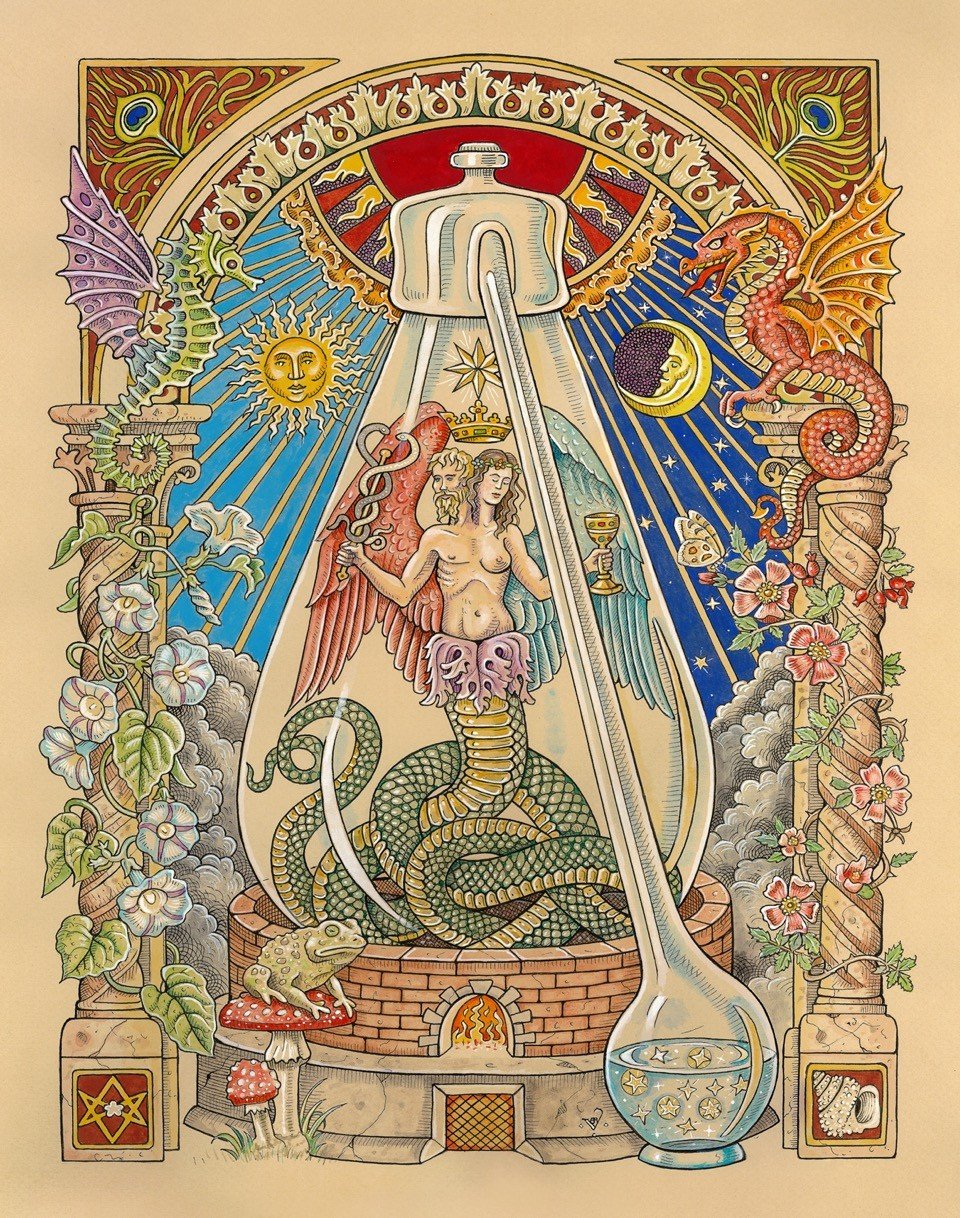
The Alembic. Pen & Ink, watercolor and gouache on toned paper. 11” x 17”. 2024
While I admire Fuchs’ oeuvre on principle, I have been more personally influenced by the mystical renderings of the very loosely identified Symbolists of the late Nineteenth century, specifically the atmospheric nuance of Böcklin’s haunted classical landscapes, the vital immediacy of von Stuck’s mythical themes, the cold beauty of Khnopff’s solitary subjects, the otherworldly textures of Odilon Redon’s dreamscapes, Delville’s ecstatic form, and so on. I have also been inspired generally by the mid nineteenth century Nazarene movement in Germany, which pursued late medieval aesthetics and techniques by way of Romantic sensibilities. All of these artists placed importance in elaborating on a historical precedent, whilst infusing their visions with uniquely subjective nuances unique to their time. In this way I see all these divergent movements as ultimately contributing to a larger canon.
In terms of finding inspiration in twentieth century Visionary artists, the allegorical compositions of Johfra Bosschart, which incorporate mythical themes and make use of complex symmetry, certainly resonate with my own inclinations. There is some mid to late twentieth century fantasy art, specifically the Tolkeinesque subjects conveyed most effectively by Alan Lee’s evocative watercolors, which likewise informed an aspect of my creative development. Aside from being an ambient presence throughout my youth, fantasy art on the level of Frazetta also intersects with esoteric themes and utilizes more graphic compositional treatments. I would also be remiss if I did not mention my immediate peers, including the aforementioned Madeline Von Foerster, and my long time friend and colleague, David D’Andrea, along with innumerable other artists, craftspeople, and visionaries who I have encountered along the way. The inspiration, support and feedback provided by comrades likewise endeavoring to navigate the creative journey has been invaluable, and continues to be so as the unique cultural and creative challenges of the Twenty first century take shape.
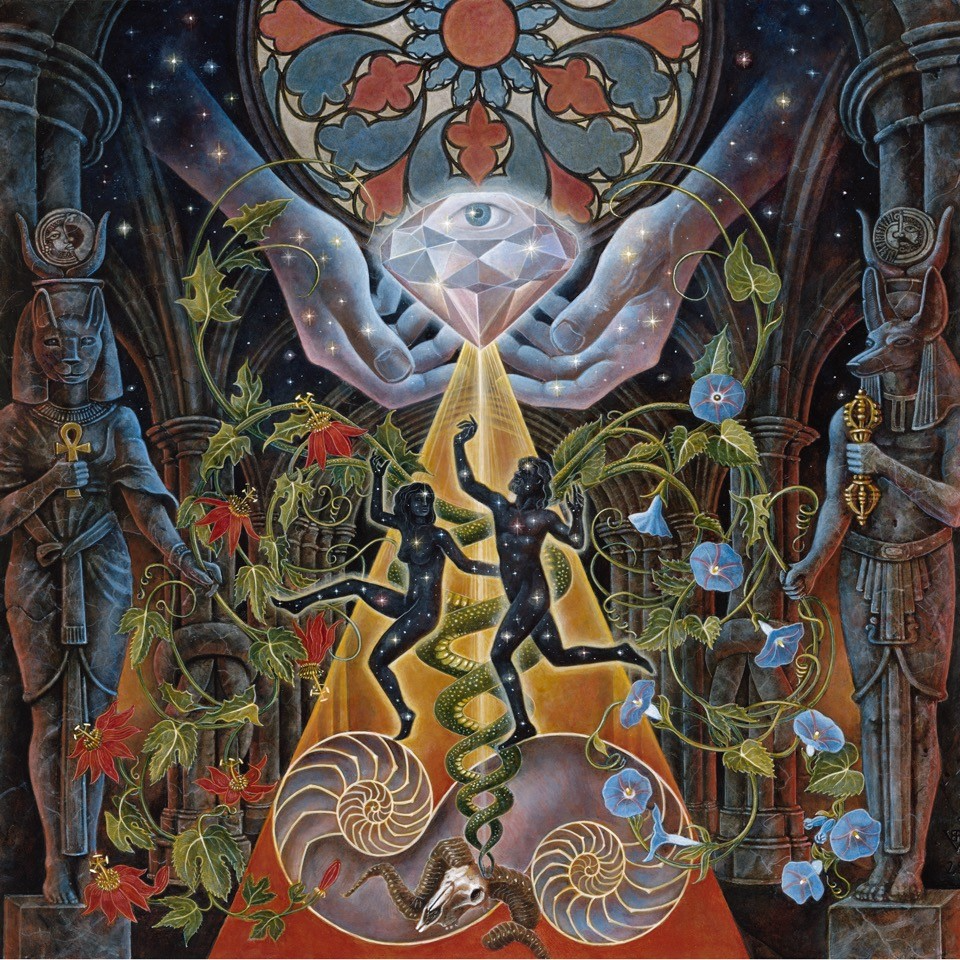
Adamant. Polymer paints on panel. 24” x 18”. 2025
OL: Speaking of occult authorship, you’ve had the chance to work extensively with Daniel Schulke on several printed materials dedicated to the occult dimensions of plants. The reception of your art in the recent Three Hands Press title, The Green Mysteries, has been highly praised. It has resonated with countless readers, who do feel as though the work bids them entrance to a different world. For such a work, how does the author delineate such an extensive and diverse vision to you? What sort of dynamics come into play when refining the pieces?
BV: The Green Mysteries and its’ creation is somewhat anomalous in my oeuvre, given the sheer volume and scale of that particular project. All credit ultimately goes to Schulke for conceptualizing, producing, writing, and financing the endeavor. I was merely the hand that rendered the vision. This was a creative adventure that spanned many years, with myriad twists and turns en route, innumerable challenges and rewards encountered on the path. The scope and scale of the work actually evolved over time as well, the ultimate destination only ultimately becoming clear through immersion in the process. I would describe the experience as labyrinthian, which like so many creative journeys, is wrought with false arrivals, dead ends & retraced steps, confrontations with minotaurs, laborious efforts, endless revisions, and the ever present excitement of discovery. All this culminating in the arrival at the epicenter, which is this case was the incarnation of the published work itself.
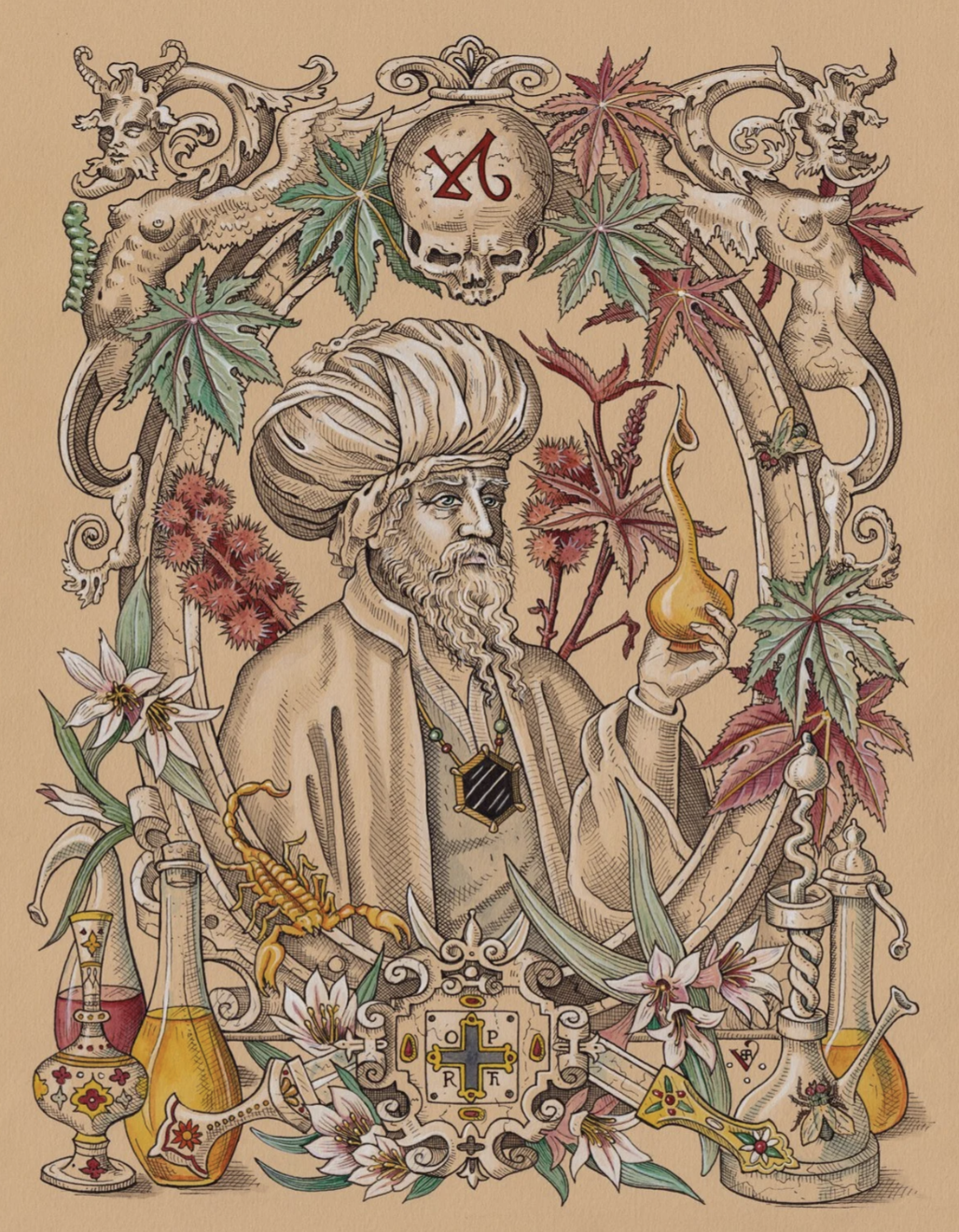
The Alchemist, Wahshiyya. 14” x 18” 9” x 11”. Pen, ink, Watercolor & Gouache on paper. 2016.
In order to attain such an elevated level of productivity in collaboration, a number of delicate factors must be balanced, paramount amongst them being a sustainable process of creation. I typically work in several distinct phases, and it was necessary to streamline these procedures. Each image had to be conceptualized first in written correspondence, then sketched in graphite to be reviewed and approved before the final ink drawing was executed. There are additional technical considerations that must be made in preparing the images for Print, and in this case it was also invaluable to have Joseph Uccello’s adroit care in executing the layout of the book. For a project of this magnitude, with hundreds of individual illustrations, it was essential for Schulke & I to have a foundational understanding of our respective working methods, and to have shared aesthetic vision. Many years of collaboration refined all these factors into an efficient enterprise, focusing ultimately on the generation of original content. It takes a long time to establish such effective working perimeters with a patron or colleague, and it rarely culminates as spectacularly as it did with The Green Mysteries, so I am indeed grateful to have had the opportunity to have worked on its’ creation. I regard this as a lifetime achievement.
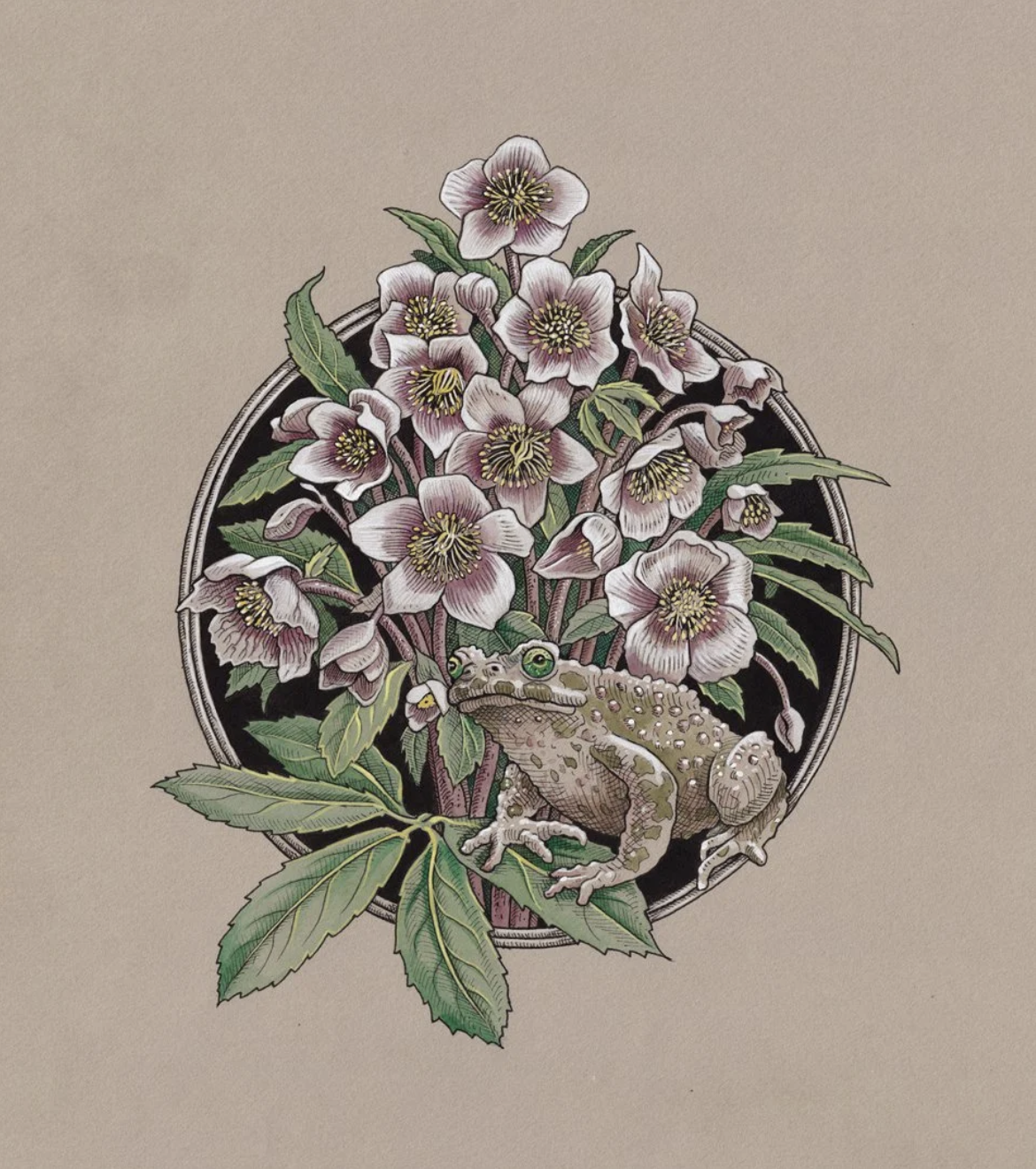
Hellebore. 9” x 11”. Pen, ink, Watercolor & Gouache on paper. 2016. (The Green Mysteries)
Other collaborations with Three Hands Press, and with Schulke specifically, are ongoing. Most immediately is the imminent publication of The Onomasticon of Occult Herbs, which is a lexicon of plant lore. This is a very different format than that of The Green Mysteries, and the illustrations, which are here primarily decorative, serving to establish aesthetic nuance, reflect this distinction. Expect more news and announcements in the seasons to come
OL: Further work has also been carried out with esoteric & occult authors and figures like Robert Allen Bartlett, Raven Grimassi, and William Kiesel. What do you feel it is about your own work that attracts so many folks from the occult arena to draw on your artistic expression?
BV: In this case, the accumulation of collaborations is simply the inevitable outcome of gravity and it’s effects over time. Saturn’s hard lessons ultimately manifest as boons if one labors long enough. The more one works, the more work one is allocated. It would be an oversimplification to say that each project leads to the next, because the process is anything but linear (I will evoke the labyrinthian allegory again), but it’s true that if one embraces an opportunity, more will invariably follow. I have always been a working artist, in the very literal sense that I accept commissions and endeavor to visually elaborate on a conceptual precedent, accommodating the unique requirements of the project and the format in which it manifests. This approach has endeared me to authors, publishers, musicians, and record labels; anyone who has a creative vision, a desire to manifest a Gesamtkunstwerk, and who values imagery which is produced by hand using traditional techniques.
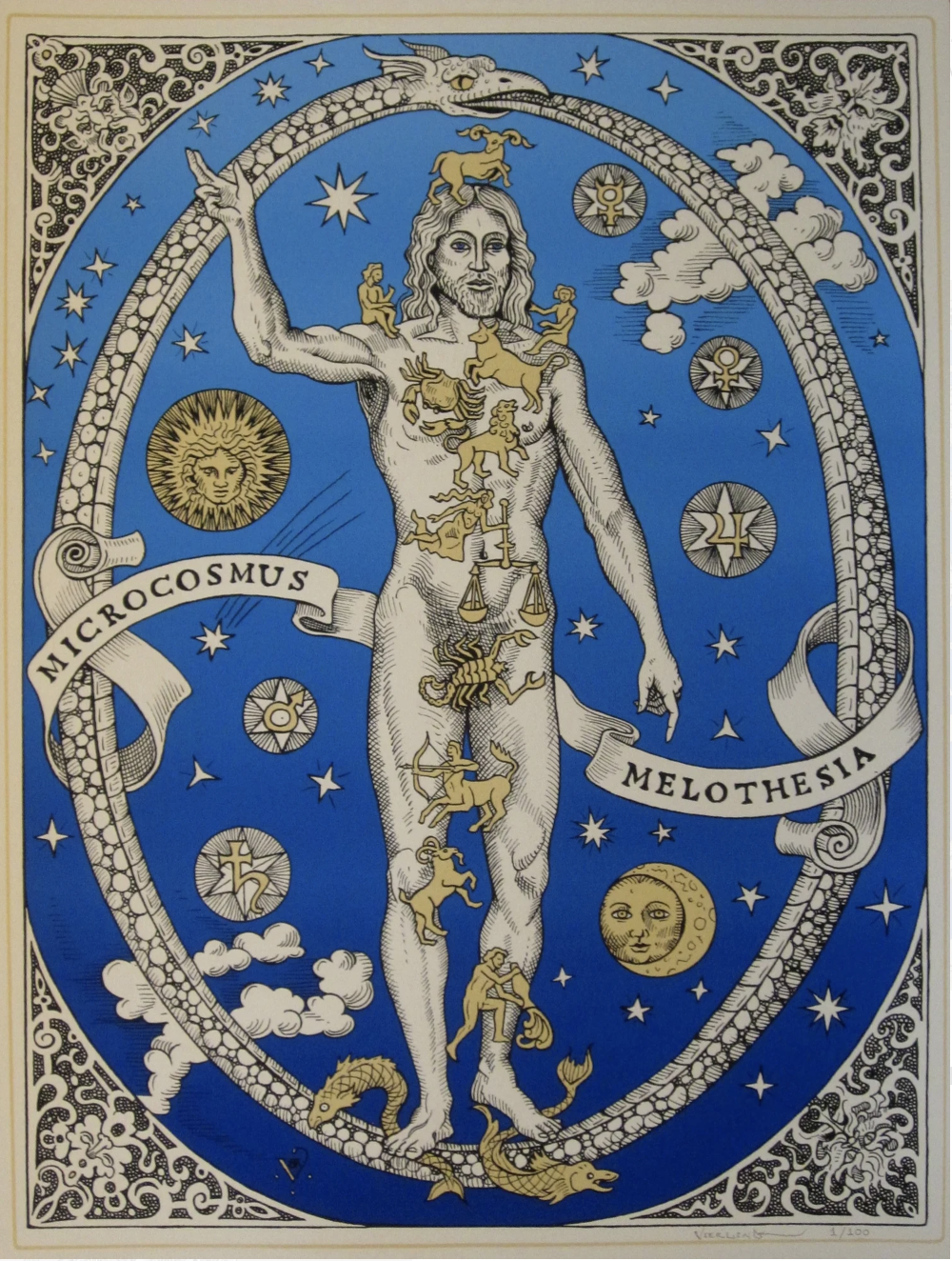
Microcosmus Melothesia. Three color silkscreen poster. 18” x 24”. 2012.
Thematically speaking, my work leans heavily on historical precedents and allegorical content, which lends well to esoteric topics that intersect with these attributes. I invest in understanding the subject through research, and how it may have been visually depicted over time in different contexts. In this way I incorporate conceptual precedents into my compositions and elaborate on visual themes in a manner similar to how a composer might incorporate the leitmotif of previous works. Esoteric subjects more broadly also have the advantage of being somewhat mutable, there is not always an indoctrinated form to adhere to, one is free to decipher by way of associations, dreams, visions, and raw inspiration. It is this paradigm which I find appealing, the historical precedent coupled with an oft unorthodox interpretation, aesthetic possibilities which may not be as readily available to those who work with more dogmatic subjects. This dichotomy fuels a greater creative impetus. With the hermetic emphasis on bridging apparent dualities, this approach suitably aligns.
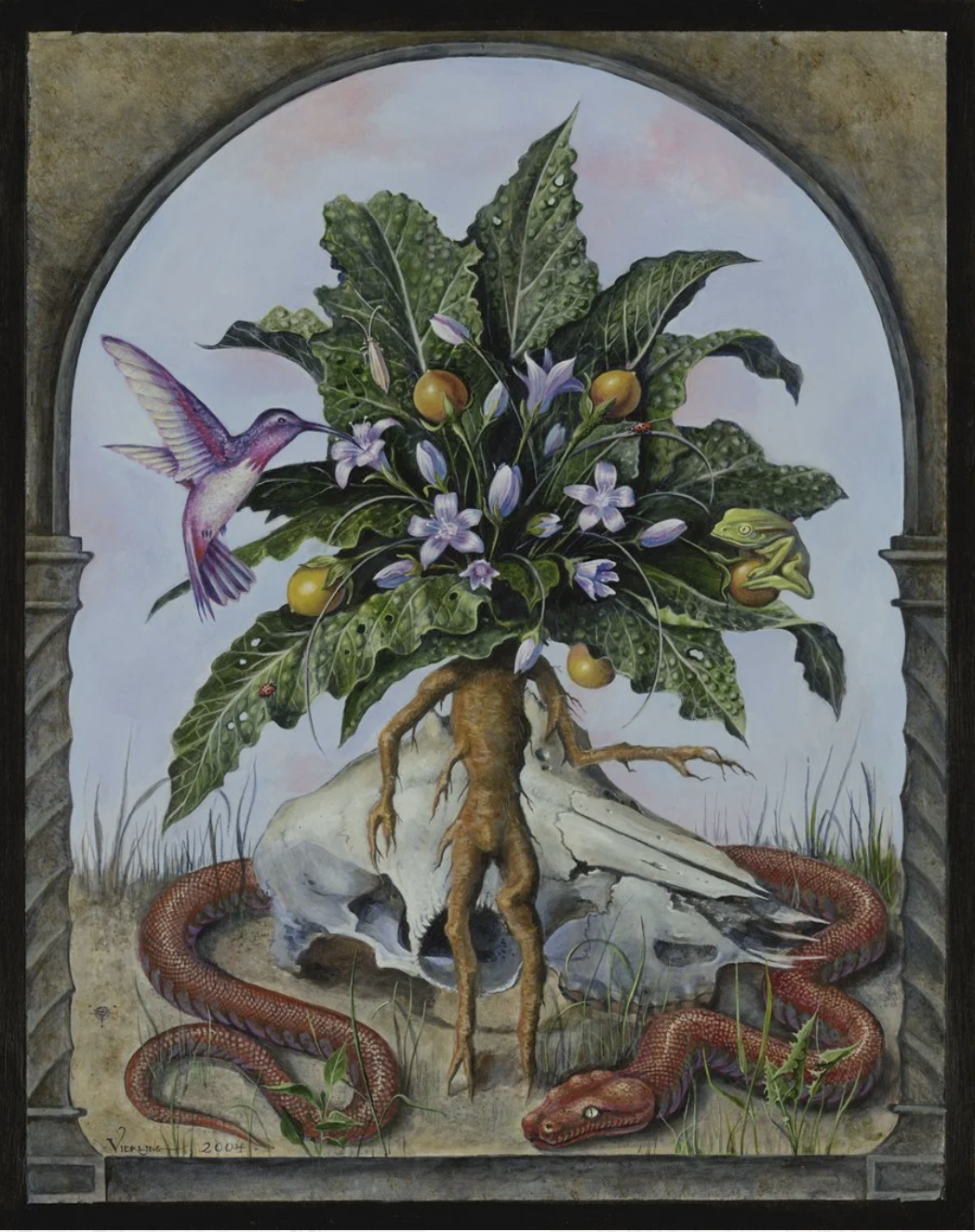
Mandragora officinarim. Polymer paints on panel. 16” x 20”. 2004.
As with Three Hands Press, collaborative endeavors with other authors, musicians, and publishers are ongoing, with more to be unveiled in the very near future. I will take this opportunity to mention a pending project with Ouroboros Press, a book titled Tuba Veneris: The Consecrated Little Book of Black Venus, which is a historical text attributed to John Dee. I executed several illustrations for this succinct tome, which should begin shipping from the publisher later this summer.
OL: Finally, with so many projects in fruition – and on the horizon – do you find yourself able to create art in a more personal or exploratory way? How does this feed back into your commissioned, gallery-centered, or generally more expansive projects.
BV: My work is currently almost entirely commission based, there’s very little activity in the studio that is done purely for self gratification, or to exercise basal expression. I’ve tended towards a holistic view of art production, the precedent coming from the legacy of the many painters and image crafters over the millennia who worked vocationally, there being no separation between patronage, commissioned projects, and individual showmanship. When examining the lives and works of the bygone Greats, whether it’s Giotto in the Thirteenth century, Dürer in the Fifteenth, or Mucha in the Nineteenth, you find a synthesis of service, labor, vision, and material outcome which stand the trials of time. These factors are all integrated into one process of creation and production. For many centuries the Artist’s role was as a vocational craftsperson tasked with bridging the intangible Zeitgeist with concrete representation that the collective might interact with. This was achieved on all levels of engagement: from individual portraits for esteemed patrons, printed books for the institution & the collector, paintings for public spaces, and even broadside prints for the causally interested. I view this phenomenon as a responsibility as much as it is a privilege. It exists in context to collaboration, and is the outcome of broader cultural engagement. In this way, it is not specifically an expression of the individual, but rather of a collective current which permeates centuries of human activity.
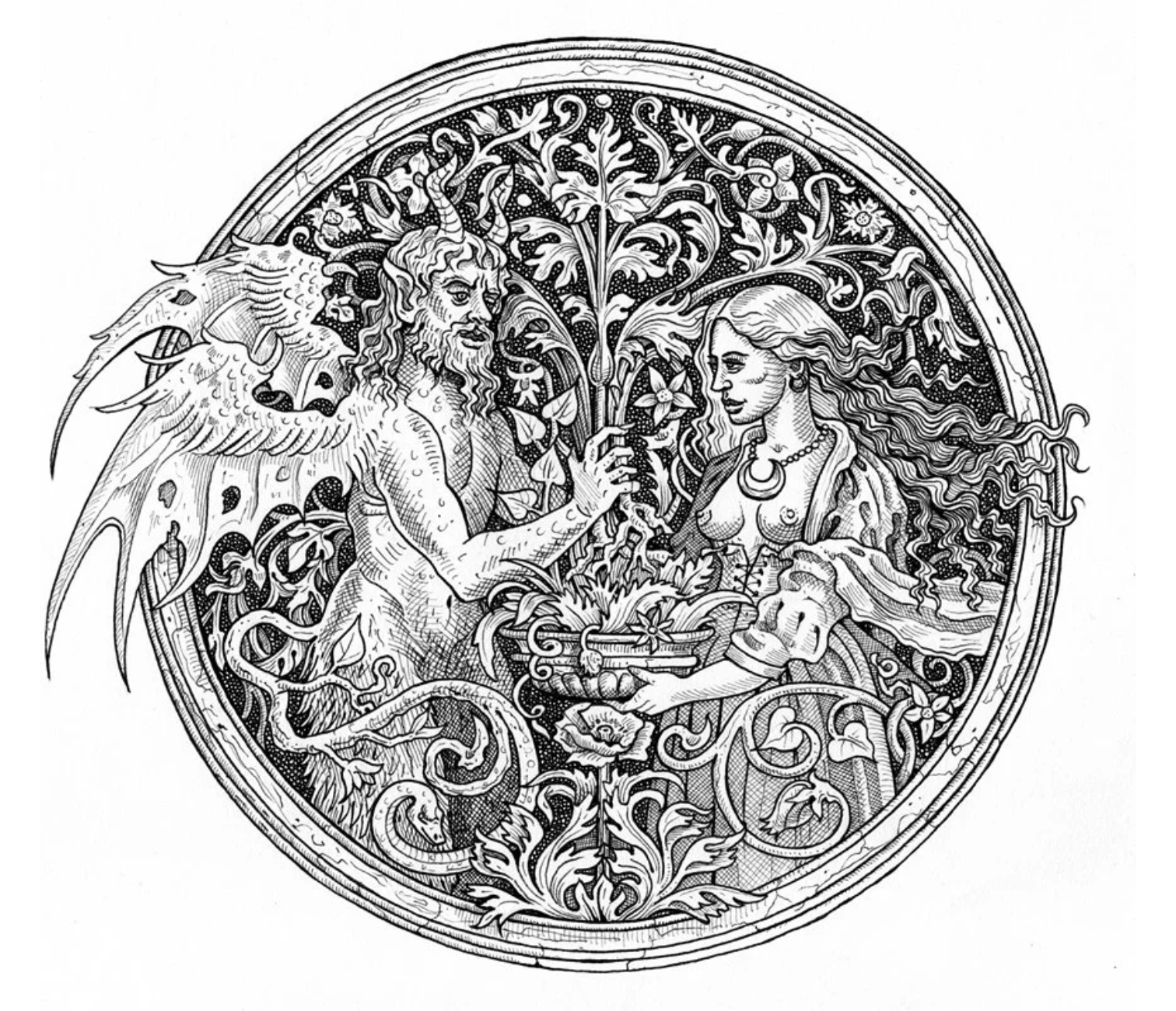
Witch & The Devil. Pen & Ink on paper. 9” x 11”. 2014.
The late Twentieth century, postmodern, model of the artist as essentially an isolate phenomenon, producing work solely for a gallery or institutional exhibition is not something that I’ve really connected to. When I do show my work in a gallery setting, it’s the same original material that I produce for more mundane applications. I’m also absent any background in Academia. I never attended an art school, or received accreditation from an Institution, I lack experiential understanding of that model and how it functions. My inner process is inherent in all the work that I do, from the commercial to the conceptual. It can be found in my prints, drawings, and paintings, whether these appear in a book, as a poster, or on the cover of a musical album. I don’t believe that the Artist exists in a hermetically sealed vacuum. I question the notion, popularized by myriad post-modernist movements, that Art is principally a psychological mirror or a distinct expression of the individual. Everything ultimately informs the Work; the achievements of past Greats, the influence of cultural and technological factors, the feedback from one’s peers and society writ large, and also one’s subjective inner experience. Myriad parts, all relevant.
The most important thing is simply to work. It may be a fascinating intellectual exercise to reverse engineer everything that goes into it, critiquing the outcome with the advantage of hindsight, but in terms of the creative process itself, I find that total immersion is essential, while excessive analysis is detrimental. I here defer to Goethe’s concept of Zarte Empirie, which demands that one actively engage with the World; participate in the material realm, experience it’s joys and sorrows, embrace failures and victories with equal ardor, and let the natural forces flow through one’s efforts. A conduit for forces above and beyond the Self.
Benjamin A. Vierling (b.1974) is a California based painter & illustrator working in traditional media.
His work appears on numerous book and album covers, most notably: The Pentiment soundtrack, (2024) Bill Fay’s final full length LP, Countless Branches (2020), and Joanna Newsom’s grand opus, Ys.(2006) He is the illustrator of The Green Mysteries, an Occult Herbal, by Daniel A. Schulke.(2023)
Past exhibitions have taken place at the Strychnin Gallery in Berlin, Germany, the Roq La Rue Gallery, the Mortlake & Co. Gallery in Seattle, and the Modern Eden Gallery in San Francisco. A Decennary Retrospective of Vierling’s work was held at Seattle’s Gage Academy of Art, in 2014.
The Occult Library extends a word of thanks to Benjamin Vierling for his thoughtful and engaging responses.
More information on Benjamin’s work, including a full Curriculum Vitae, can be found via his website.
Benjamin can also be found on Instagram via @ba_vierling.
We encourage all of our readers to explore these pages, as well as the works of the authors & musicians who have offered reciprocal support to Benjamin’s work.