In Conversation with Travis Lawrence
Influenced by Jungian psychology and mythology, Travis Lawrence uses the art of printmaking to create illustrious allegorical imagery. Reinterpreting medieval alchemical manuscripts and illuminations, each symbolic print appears to be an excerpt of narration filled with mystery and metaphor. The viewer is invited to explore the content of these hand-painted prints through a contemplative interaction with the represented archetypes.
Travis Lawrence resides in the Midwest where he was born and raised. Having a religious upbringing opened his perspective to the interaction with ideas greater than and/or within oneself. He utilizes the art of creation as an act of opening doorways and manifesting these ideas through symbol and metaphor. Similar to alchemy, Travis uses printmaking as a meditative procedure of transforming the mundane into a higher state.
Recently, Travis published a book entitled, THE GARDEN. The work is:
“…a collection of transmissions altered only through the physical manifestation of their interpretations via the traditional craft of printmaking. The 35 hand-carved and individually painted relief prints are best understood as emblematic emanations of contemplative narratives."“
The Occult Library sat down in conversation with Travis to discuss THE GARDEN, and other topics of note. We hope you enjoy the discussion.
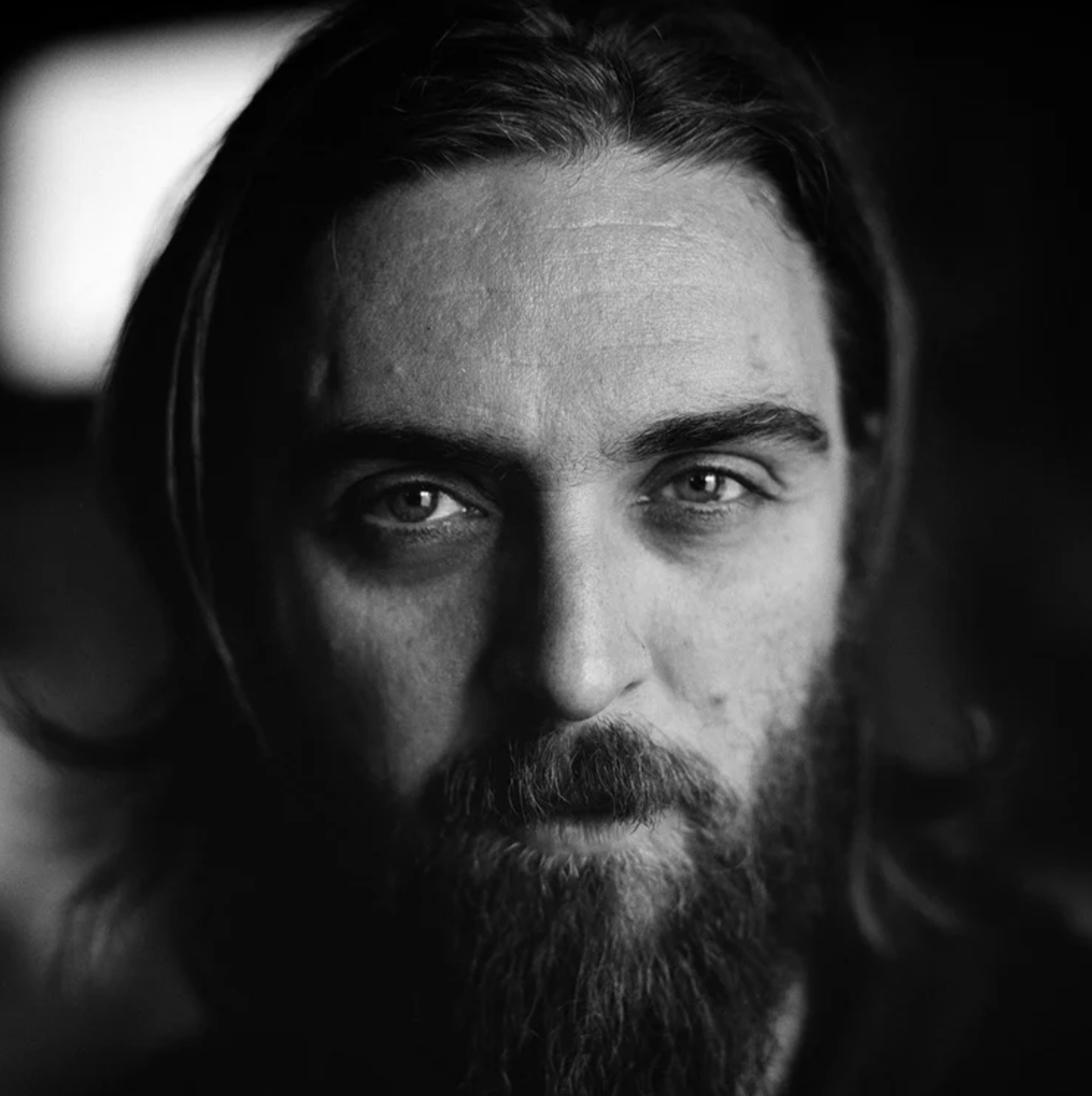
Travis Lawrence
OL: Hello Travis, thank you for taking the time to speak with us today. We have long admired your work, and we are delighted to have this conversation. Going back to your influences, you note the effect that mythic & Jungian dimensions hold for your work. Through your work, one gleans that art does not merely depict mythic processes but participates in them. How do you work to actively convey, engage, and foster this relationship?
TL: Good morning. Thank you for inviting me to be a part of this. I think what you all are doing with this page is really fantastic and I am honored to partake with you.
I believe that our contemporary cultures and modern mindstates have done a disservice in the understanding of words such as ‘mythical’ and ‘imaginal.’ Carl Jung played an essential role by being a middleman with one foot in the new world of intellect heavy science and psychology, while another foot in the unseen realms. Being introduced to his ideas in my early 20s really helped me understand a lot of my religious upbringing but also prepared me for my future explorations of art making.
Through myth and art, we begin to understand that there are several layers happening. We begin to see things symbolically, which opens new doors of meaning to us. We then begin to see that these symbols start taking on life of their own as well. Placing them with other symbols and it becomes the same process language occurs and at this point you realized that you are having a conversation. I feel that many people stop here, but the magicians and mystics recognize this and will take this engagement further.
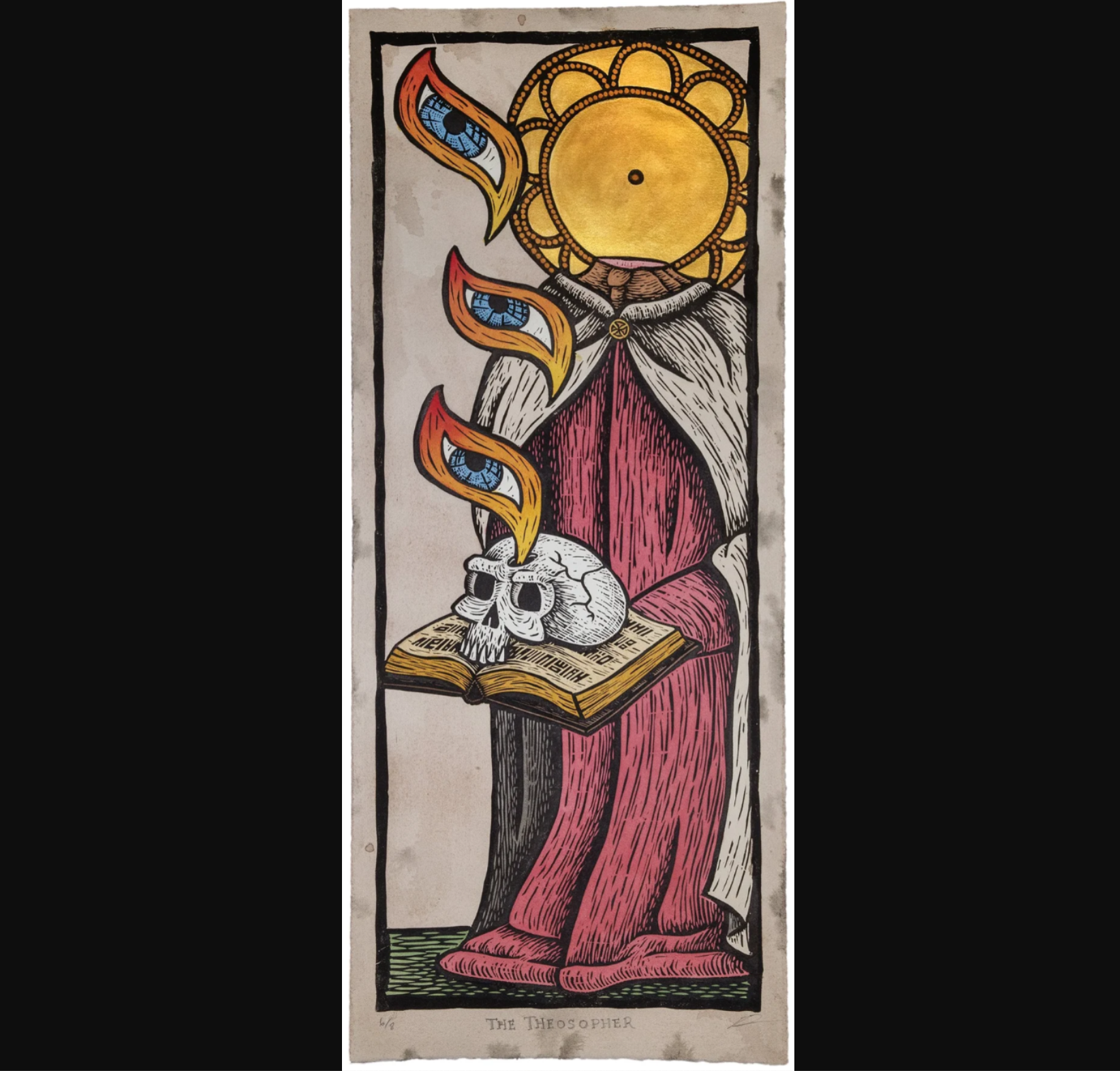
A Travis Lawrence original work entitled, The Theosopher.
OL: Insofar as your media is concerned, what drew you to hand-painting and subsequent printmaking in particular? Do you feel that printmaking lends itself in some capacity to the contemplation which you engage it with?
TL: I took an Intro to Printmaking as an elective in school. I instantly fell in love with it. It gave me this image-making result that blew my mind. Also, there were these tedious and drawn out series of multiple stages involved with the process. It isn’t quick, and it’s from an older age that really appreciates craft. It felt special and it was only a matter of time before I realized that it also felt devotional.
The hand-painting may have initially been a practical decision at first. Block printing was something that I could do on my own. I loved etching, but also knew that I wouldn’t have access to those resources without the dependency of someone else. Hand-painting my prints also resonated way more with me than just pumping out prints like an old machine. I felt I had this connection with them individually when I was spending time with them so directly. They received this energized attention. It felt — and they felt — magical.
I later found out that William Blake also hand-painted his prints. I had already been familiar with Blake and was inspired by his poetry and mystical life, so it felt even more special.
OL: To move even further back, you mention your own upbringing as occurring within two specific contexts: a religious context, and an American-midwestern context. Do you feel that working on the land in which you were raised affects your connection to early experiences in your religious life, keeping them fresh and contextualized?
TL: I grew up on a small family farm in the rural Midwest. I am an only child and we lived several miles from the closest small town. In the summertime, I didn’t see many kids my age except for those who went to the same church on Sundays. I spent most of my time outside playing with animals, and in my own imagination. I created narratives, often acted out as if they were movies that I was directing with my mind. I prayed regularly. It was a normal way of living to me.
As I got older, I wanted to go experience more of the world. I became interested in other forms of spirituality, and curious of other cultures. I moved away to go to college and then moved into the city shortly after. I had a really hard time with academia and I never felt “at home” within the city lifestyle, but I am thankful for the lessons and experiences. I was also fortunate in being able to travel a lot. I have been to most all of the US states, several European countries and even a few in Asia, but I have always been primarily Midwest based.
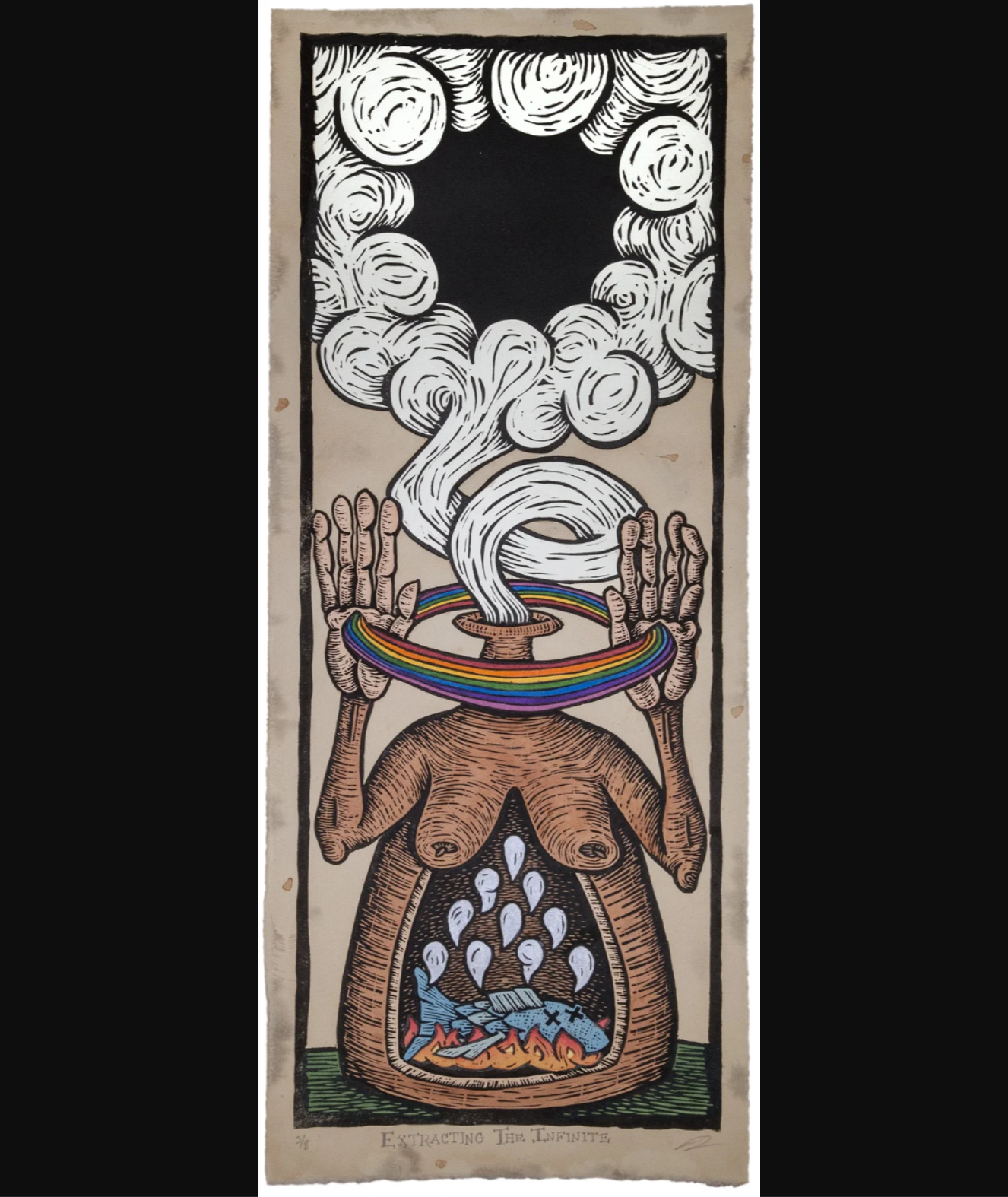
Lawrence’s original work entitled, Extracting the Infinite.
In 2019, I moved out of the city and returned to rural Illinois. It is mostly farmland where I am. We have some beautiful forests and lakes within reach, but where I am it is very open and vast. It is a desert in a different sense. I understand why many people would be afraid to live in this environment, but I loved the retreat from the modern world. I felt like a monk with a cellphone. I didn’t even have home internet for the first few years.
I began to notice my prints having these empty vast landscape horizons. I always assumed this was simplistic aesthetics, but it made sense that these scenes where reflecting my surroundings. I became aware of the Desert Fathers, who retreated the world and shared their experiences and teachings. Luckily, I didn’t have to deal with as many demons the way they described, but it did make them more recognizable in the world. I began seeing the ideas being shared with me for artwork as messages or even as the actual messengers themselves. It elevated the acknowledgment that creating can be a holy act.
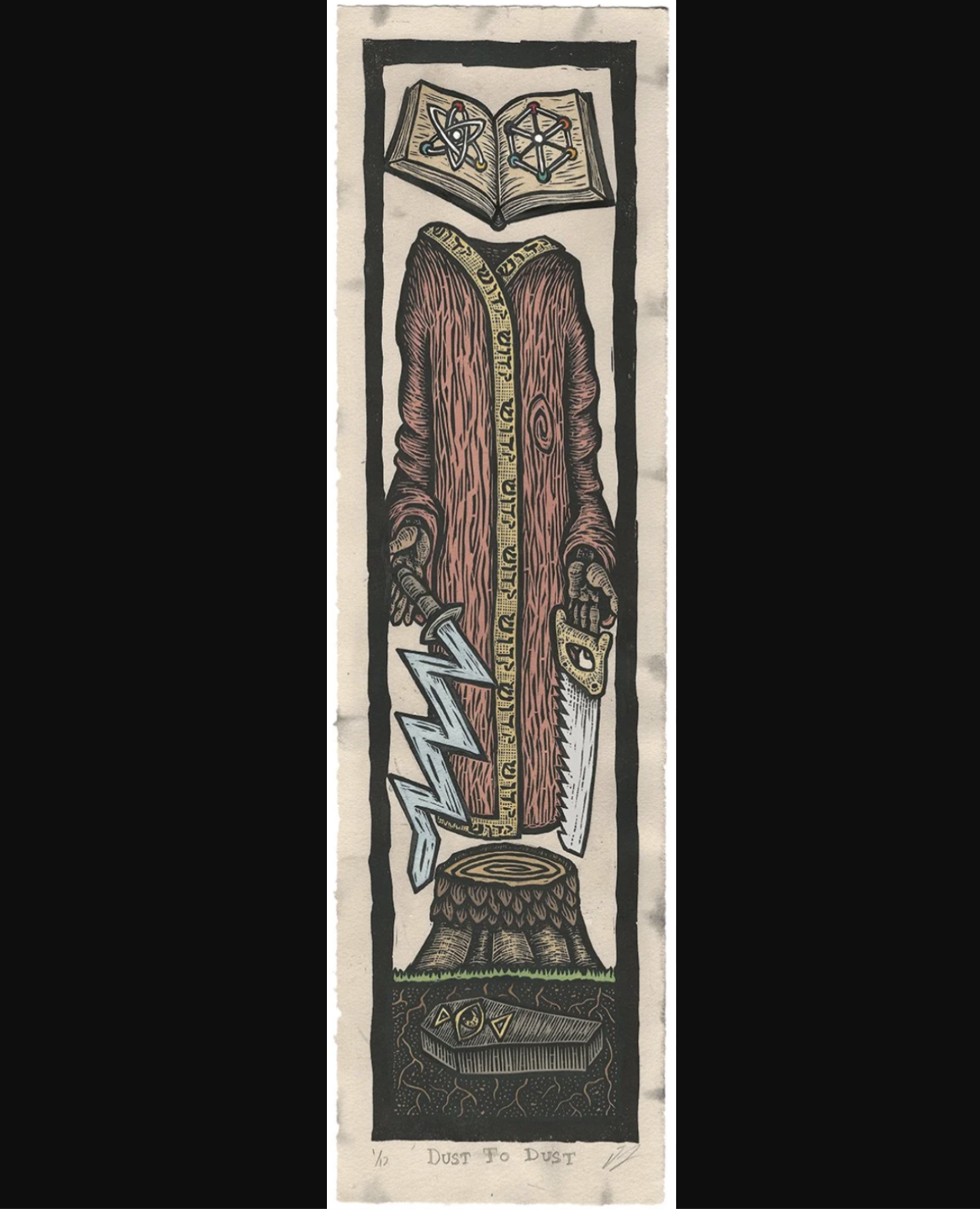
Lawrence’s original work entitled, Dust To Dust.
OL: Your work is rife with alchemical iconography, albeit in a very unique expression. What were your earliest engagements with alchemical currents in the way of books, texts, and images? Was your interest in Jung particularly fruitful as an inroad here, or were there earlier historical precedents that you gravitated towards first?
TL: Jung is probably my first real exposure to alchemy. His book Psychology and Alchemy blew my youthful mind and made me thirsty for learning more about it. I understand why operative alchemists may snub their nose at him (probably more so what came after because of his claims), but alchemy has never been a static art. Earlier forms of alchemy were nothing like what you hear about in contemporary esoterica, but, even then, Zosimos was attacking the charlatan alchemists who were doing it strictly for material purposes and no spirit.
OL: Art is always occurring in the guise of communities & traditions. You’ve been quite visible with the recent publication of your unique work entitled THE GARDEN. How do you balance community, public visibility, and sharing with the act of artistic contemplation?
TL: When I was younger, I was more concerned with being involved with communities or trying to find like minds. I was trying to find and connect with art communities to learn and grow with. I was looking for esoteric and spiritual communities for the same reason. In recent years, I have become less driven by this and more comfortable creating my own path. I personally prefer to be less visible and leave the spotlight for the artwork to be found by the right people who would connect with it. I have plenty of time by myself, but I still enjoy sharing clips and previews of steps in the process of creating. A lot of people aren’t familiar with printmaking and all that goes into it. I think they enjoy seeing a little bit into that world to better understand, especially when it takes several months from start to finish on a piece.
OL: Speaking of THE GARDEN, you state that the work is, “...a collection of transmissions altered only through the physical manifestation of their interpretations via the traditional craft of printmaking.
Further, you mention that, “... The included writings remain unaltered from their original reception, alongside their visual companions, which occurred during the same chronological timeframe.”
Are you willing to share with us how these transmissions arose and occurred? In any case, what was the onus for sharing something so personal and raw, especially in unaltered form?
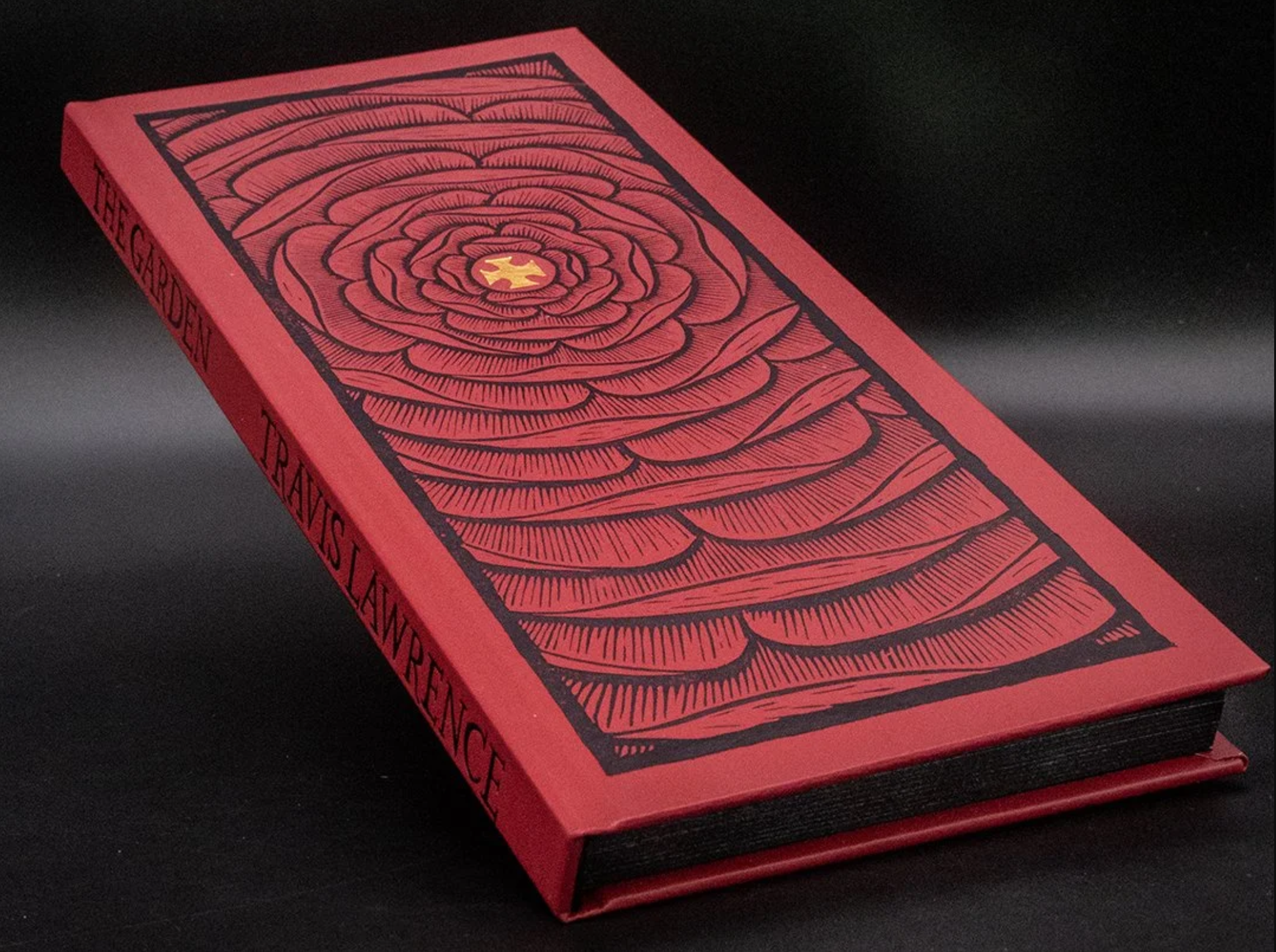
The rosy-hued cover of Lawrence’s recently-published work entitled, THE GARDEN.
TL: The visual artwork that I have been making for years has been done in a similar manner. It is usually an image that comes to me and I sketch it out ASAP so that I don’t forget it. It’s not always in these designated moments either. It often isn’t, so I always keep a small sketchbook on me. I then take these images and draw them out onto a block and begin carving. Sometimes I understand what they are. Sometimes I don’t. I learn more about them while creating them and this goes back to earlier comments about having a magical conversation with the artwork.
In these same notebooks, I also have filled with writing that comes to me in a similar manner. Sometimes they come as an automatic rambling, or a flowing prose, or phrases, but also some note references or specific events that may have happened that worth writing down. The titles of many of the pieces have come this way if related or occurring at similar times as the artwork visuals.
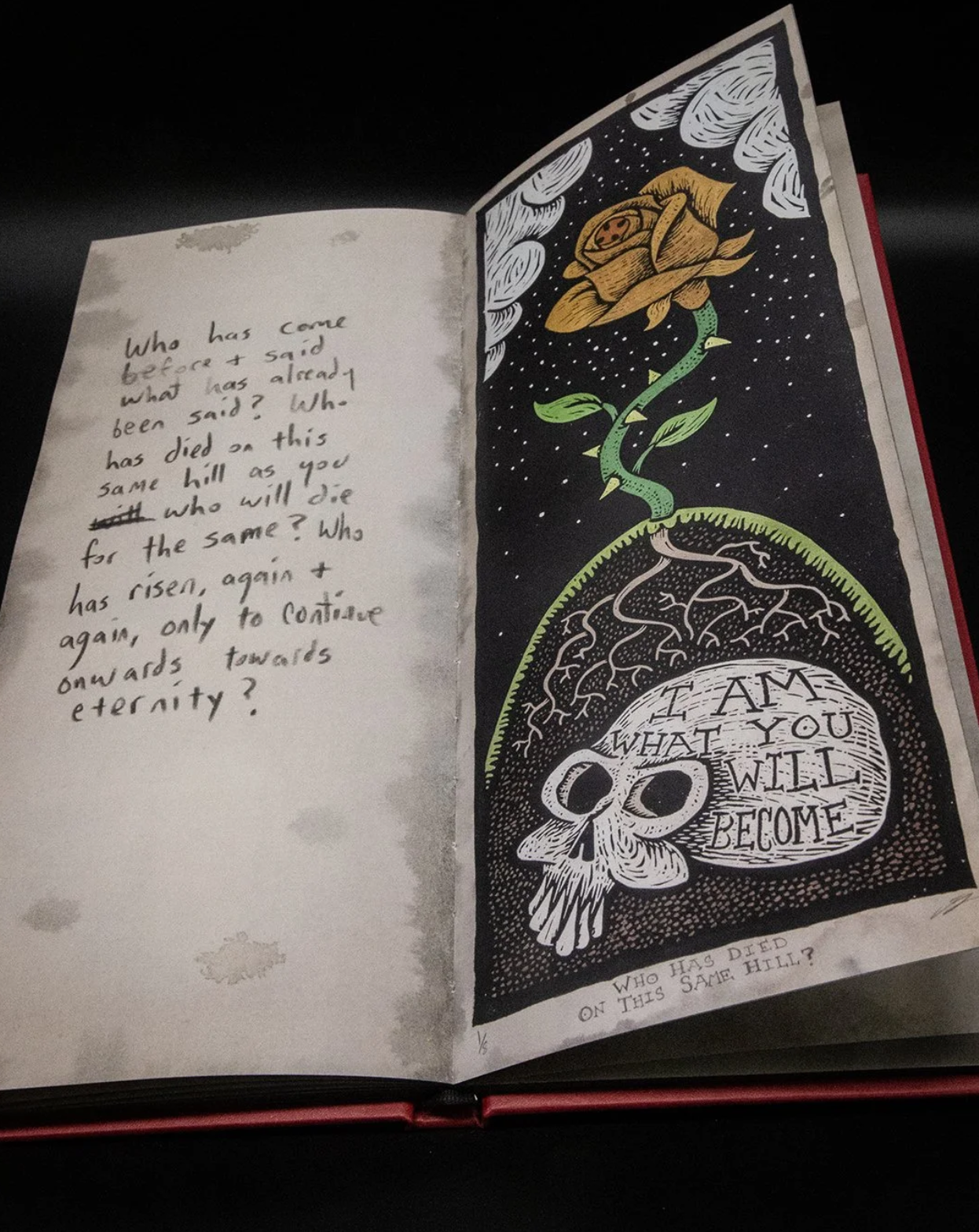
Contents of THE GARDEN can be seen above, with poetic writing on the left accompanying associated print art on the right.
My previous series, PILLARS was shared as a card deck, but I knew this series needed to be a book early on before even know how many pieces it would end up being. Even though I was anxious to do it, I felt compelled to share the writings that occurred alongside this series of prints. Presenting them in hand-written form retained that raw original energy. The grammar isn’t corrected. They aren’t perfected poems. There will be contradictions and moments that may not even make sense.
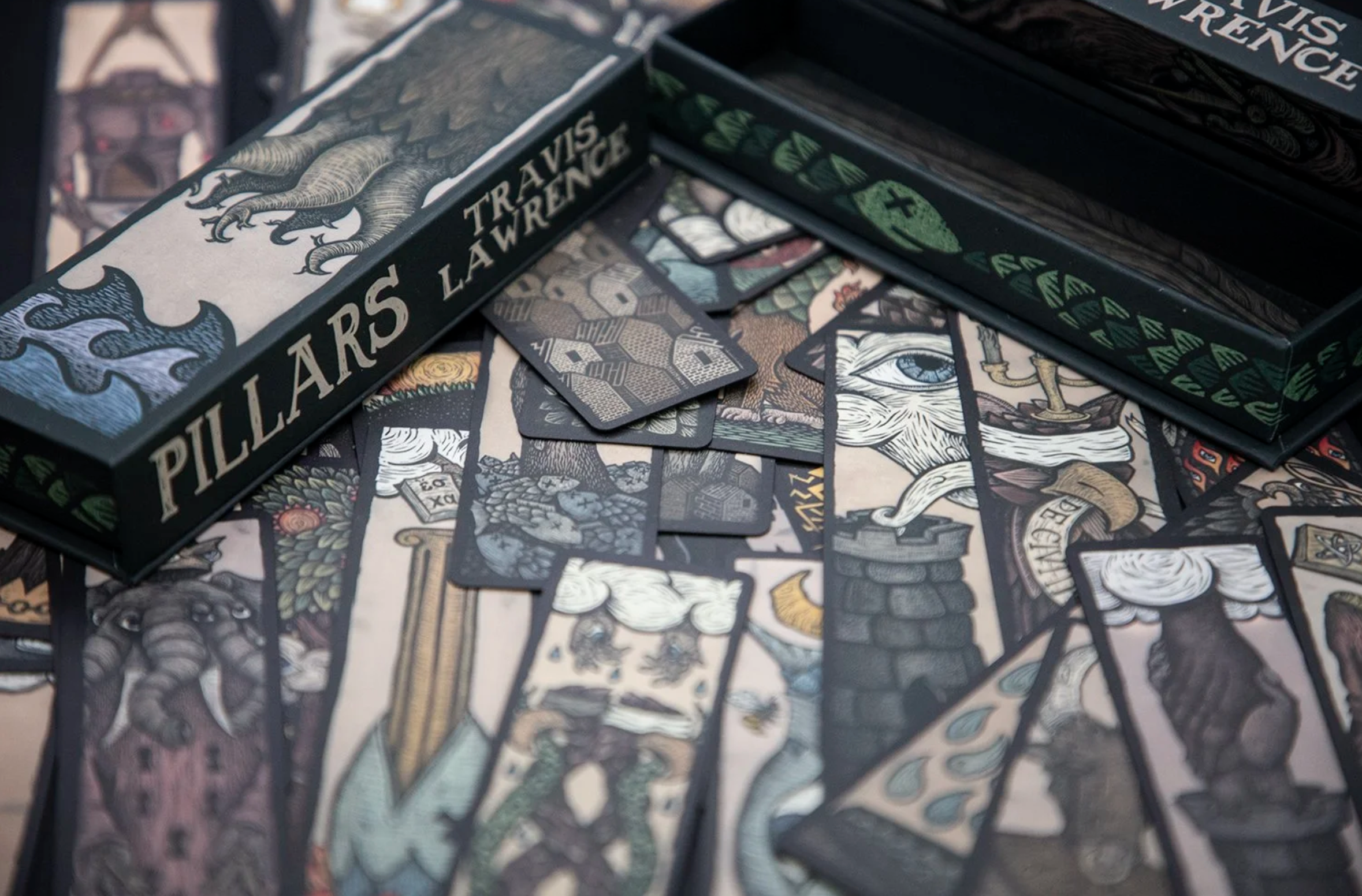
The cards shown above come from Lawrence’s deck entitled, PILLARS.
OL: Such a process is surely beyond mechanistic reproduction. We suspect you are energized by the prospect of further novel and meaningful experiences which translate to creative work! We lastly ask, what advice would you offer to budding artists who wish to engage the mythic, transmitted, or alchemical dimensions of their work?
TL: Try your best to stay as true as possible. Don’t try making art for other people. Get used to not a lot of people liking it or making any sales. It will come as you find your groove and the right people will begin to see it.
Mystical minded artists like William Blake, Austin Osman Spare, and so many others struggled their whole lives but stayed true to their visions. It doesn’t mean that you will too, but you might and you have to be ok with that. If you aren’t, then maybe you shouldn’t pursue it.
OL: We are very grateful for your time, Travis. We look forward to seeing your work unfold in new ways and wish you the best of luck going forward!
TL: Thank you so much and thank you again for what you all are doing!
An image gallery of Travis’ work can be found on The Occult Library art gallery space HERE.
Travis also maintains an active home on the web, called Infinity Prints. Travis can also be found on Instagram via @travislawrence
We encourage our readers to visit both spaces, and explore the work of Travis Lawrence.