In Conversation with Daniel Yates
Daniel Yates is a theologian, folklorist, musician and photographer with an active interest in sabbatic and Elphamic witchcraft practices. He lives in the Lancashire valleys of North-West England with his wife and two children where his postgraduate research focuses on seasonal effects on religious practices in the region.
He is the founder of The Occult Library. Beside guiding the overall vision of the project, Daniel currently works on cataloguing publishers and authors. He also oversees the art gallery project and several other forthcoming additions to the site.
Daniel has received a variety of commendations and awards for his photographic work. In June 2011, his work featured in two exhibitions in the UK, one in Liverpool and the other in Manchester. His first book Arcanum was released in October 2019, and is now available via Anathema Publishing. A work of poetry entitled Poetica was also released in August 2020 direct through his website. A third book focusing on ritual practice is scheduled to be released through Atramentous Press in the near future. He has also published in periodical publications like Fiddler’s Green, and Grimoire Sylvanus.
Daniel is also a craftsman working in stone and wood carving, and a musician spending time with the hammered dulcimer, Trossingen lyre and the fujara, a Slovakian traditional overtone bass flute.
Our staff librarian and blog writer, Danny Scopelliti recently spoke with Daniel. We hope you will enjoy the ensuing conversation.
OL: Hello there Daniel, we’re glad to have this conversation with you. Considering The Occult Library project, you have a quite immersive role as founder. Among our staff, it has often been said that you deeply embody the roles and attitudes often found among career librarians. You also maintain outside engagements of authorship, editing, publishing, and education. Do you feel that this impulse towards fostering and structuring information arose at an early age? What motivates it, and how did you grow this value within your own sphere?
DY: As the venerable Francis Bacon said ‘Ipsa scientia potestas est’ or ‘Knowledge itself is power’. From an early age my mother drove into me the understanding that books are our connection to the minds of others. They are the source of conversations we can rarely have face to face. Some we will agree with, others we won’t, but ultimately, we must read to know which is which. She raised me to challenge assumption and to especially challenge the pages of a book — that it should not be considered authority just because it went to print and that I must read all around a topic to truly begin to understand it. The printed word therefore was instilled in me to be one of mankind’s most important inventions and I have always sought to treat it as such.
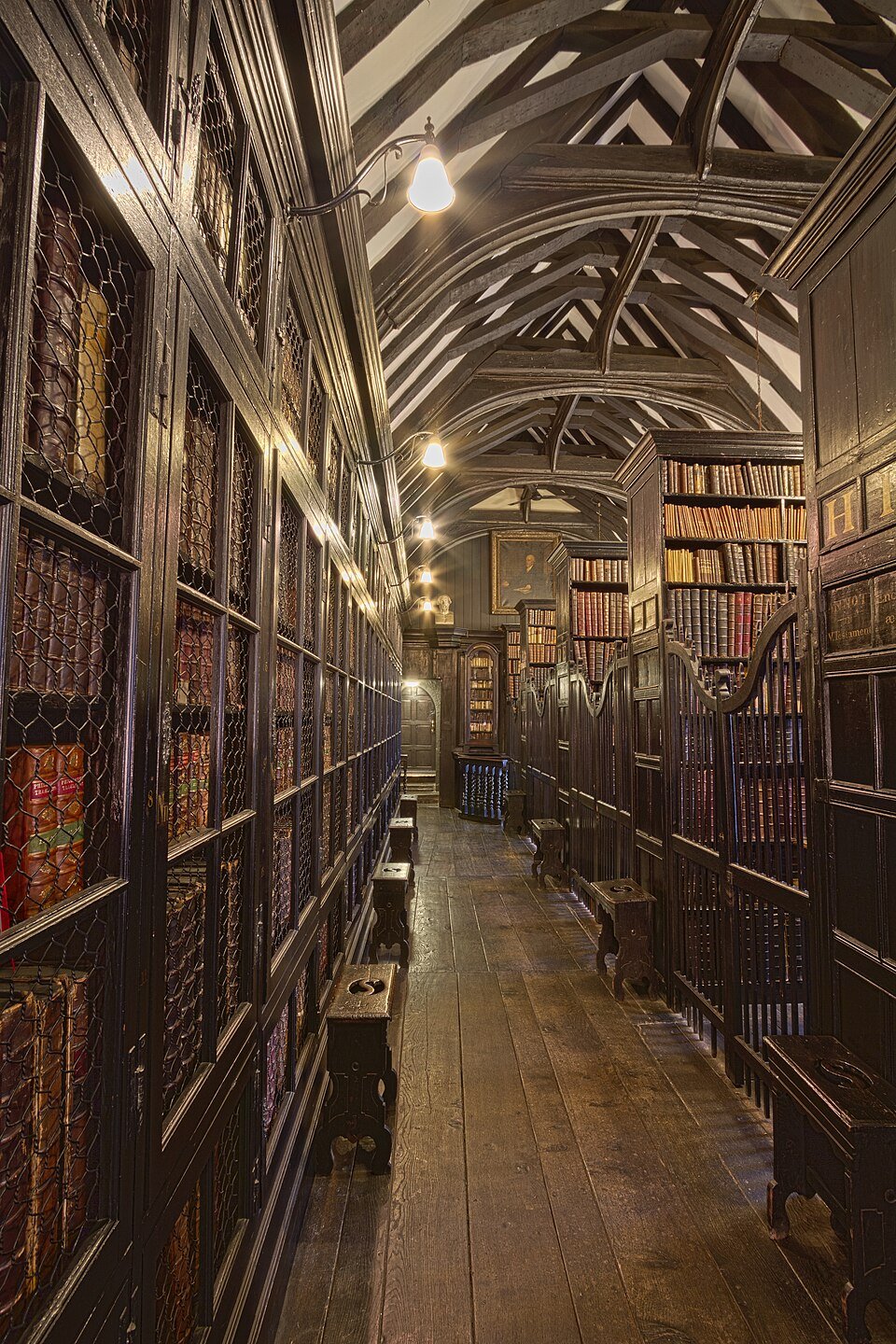
Interior of Chetham’s Library, the oldest free public reference library in the English-speaking world. The library, at Yates’ doorstep, is a best-loved place of study and reflection.
From a very early age I was obsessed with cataloguing things, for example back in the early 90’s my mother had a bit of an obsession with recording endless amounts of animal documentaries on VHS and I systematically went through and catalogued the contents of them all, down to the run number on the cassette for each new show. It was only a matter of time before the same obsession came along with me into the world of occult books. This was the seed that led to where we are now.
OL: With this in mind, what are some of the experiences you have had with the occult in library settings: not only in a scholarly or educational sense, but also in the sense of the library itself as a kind of lived occult space?
DY: A very interesting question. Within a library setting my experience of the occult has at times been with my head firmly rested between the pages of endless amounts of antiquarian occult, or occult adjacent, works — as well materials related to my folklore research. I am privileged to have the oldest public library in the UK on my doorstep that houses some astounding rare texts that I have been able to study and, in some instances, work on translation/contextualisation of. These have varied from academic leaning texts to handwritten spellbooks and ritual workings from several centuries ago and beyond.
At Chetham’s library in Manchester, alongside the wonderful collections, there are artworks and aspects of the structure itself steeped in occult history. Closer to home my entire house is pretty much my personal library containing arguably the largest collection of antiquarian books on northwest British witchcraft and folklore in the country, as well as my own collection of occult works. In this case I am firmly of the belief that the space serves to charge the work that is done within it and could at times be seen as library-as-temple.

This photographic work from Daniel Yates is entitled, Arcanum. The image is present on the paperback edition of his book of the same name.
OL: Some years ago, prior to your work with The Occult Library, you had devised a community spreadsheet which was well-received. You had also explored other tools and platforms for sorting and detailing books and publishers in the occult community. Nonetheless, you ultimately opted towards constructing a comprehensive website. What led to this decision?
DY: The spreadsheet I started with was originally devised as a tool to help combat the book scalping market that was becoming so prevalent. I was seeing books that were often still available from the publishers being flipped on the secondhand market for obscene prices. I decided to catalogue the titles of all the publishers and use a colour coding system to show what is available (green), sold out(red) and forthcoming (orange). This very quickly became unsustainable as it involved periodically visiting every page to check availability. I also realised that I wanted to do more than just show availability and instead actually catalogue all these titles properly because another issue I had been seeing was misinformation on various editions.
Iconography of The Occult Library, as devised by Leodrune Press
A common example of this was people removing the dustjacket from Three Hands Press titles to show the foil blocking beneath and then listing it as a deluxe edition, because many didn't realise the books had the foil hiding under there. There is also a lot of ephemera that comes with many deluxe titles, and I wanted to ensure people knew of their existence. These and many other reasons gave me all the impetus I needed to begin work on the website and provide the cataloguing service that I feel the occult community has needed for a very long time.
OL: Regarding your own written efforts, the latest text from you is entitled To Glimpse a Hollow Hill: A 17th Century Account of the Unseen World. The work details Robert Kirk’s important, yet oft-misread, work, The Secret Commonwealth. Your book includes “...for the first time, the complete and unabridged text of The Secret Commonwealth in both its original form and a fully modernised version.” What were the most prominent challenges and rewards of writing this book and respecting Kirk’s original vision: translation efforts, conveying the sense for the material, so forth?
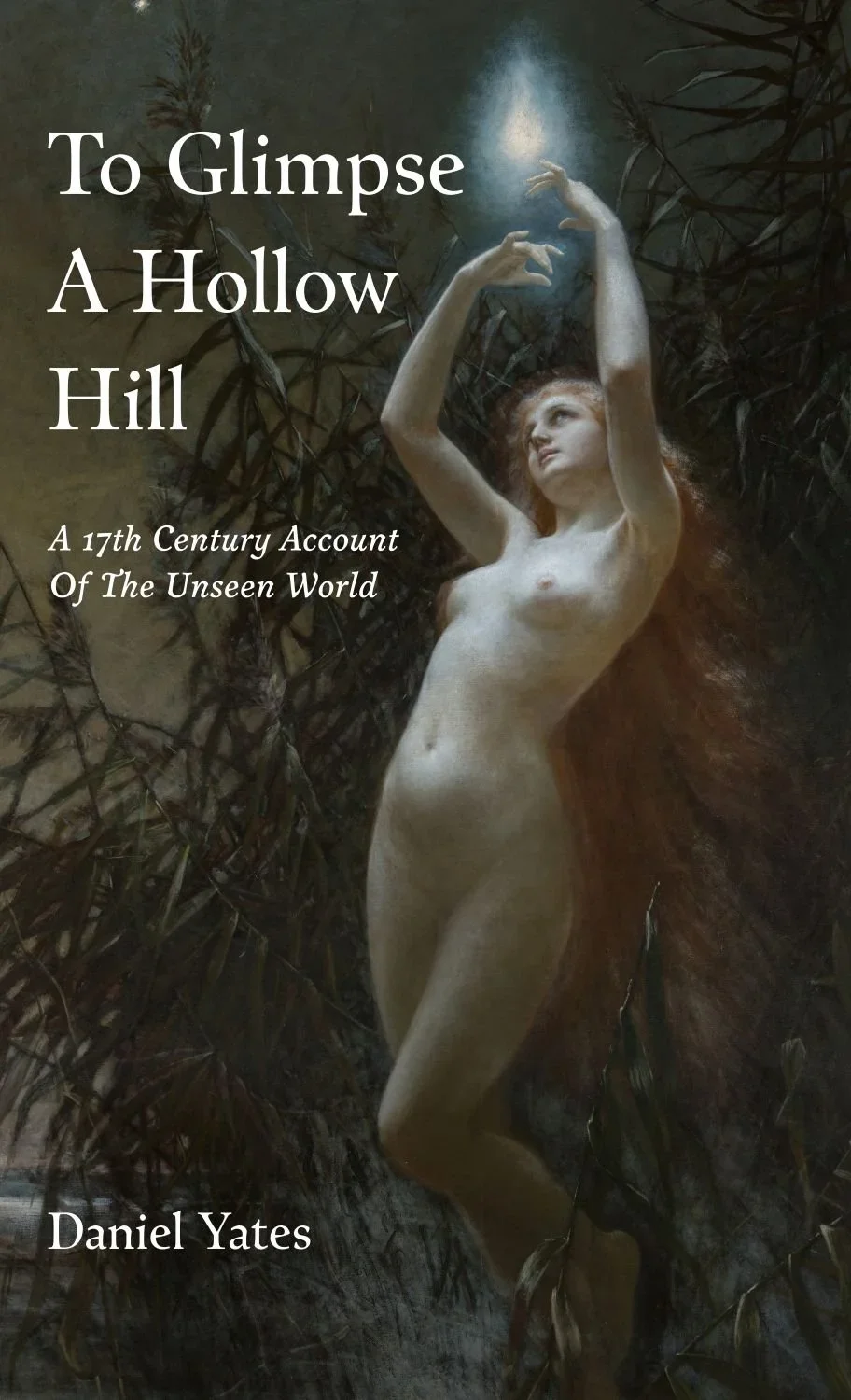
Front cover of the standard hardcover edition of Yates’ book To Glimpse a Hollow Hill: A 17th Century Account of the Unseen World. Published by Atramentous Press. 2025.
DY: The biggest challenge first and foremost was to make sure I adequately conveyed why there was even a need for the book to exist in the first place, and that it is far more than just a new presentation of The Secret Commonwealth. A considerable effort and emphasis was placed on providing a modern rendering of the text that did not just translate his words but rigorously maintained his meaning in the process — a far from simple task but one I feel confident has been done correctly. I made sure a transcription of the original text was also provided alongside my own commentary of a some of the key points of the text.
OL: Your own personal work with Elphamic witchcraft no doubt centred your focus on Kirk’s work — perhaps vice versa. Were elements of Kirk’s work vital to the formation of your own praxis and outlooks on witchcraft practice?
DY: It might surprise some to hear that no, Kirk's work did little to inform my work with Elphamic Witchcraft. That is not out of disregard for Kirk but because the nature of Elphamic work goes beyond an outer viewpoint of Elphame, which is what the work of the seers entails. They are not actively engaged with the bridge points of Elphame and, in fact, Kirk goes to great length to explain that the seers are very much involuntary recipients of the ability to see and subsequently that ability does not by proxy impress the ability to understand what they see. This, alongside the reverse engineering of these practices, is what has led to some very bizarre notions of what Elphame is, and who those within it are.
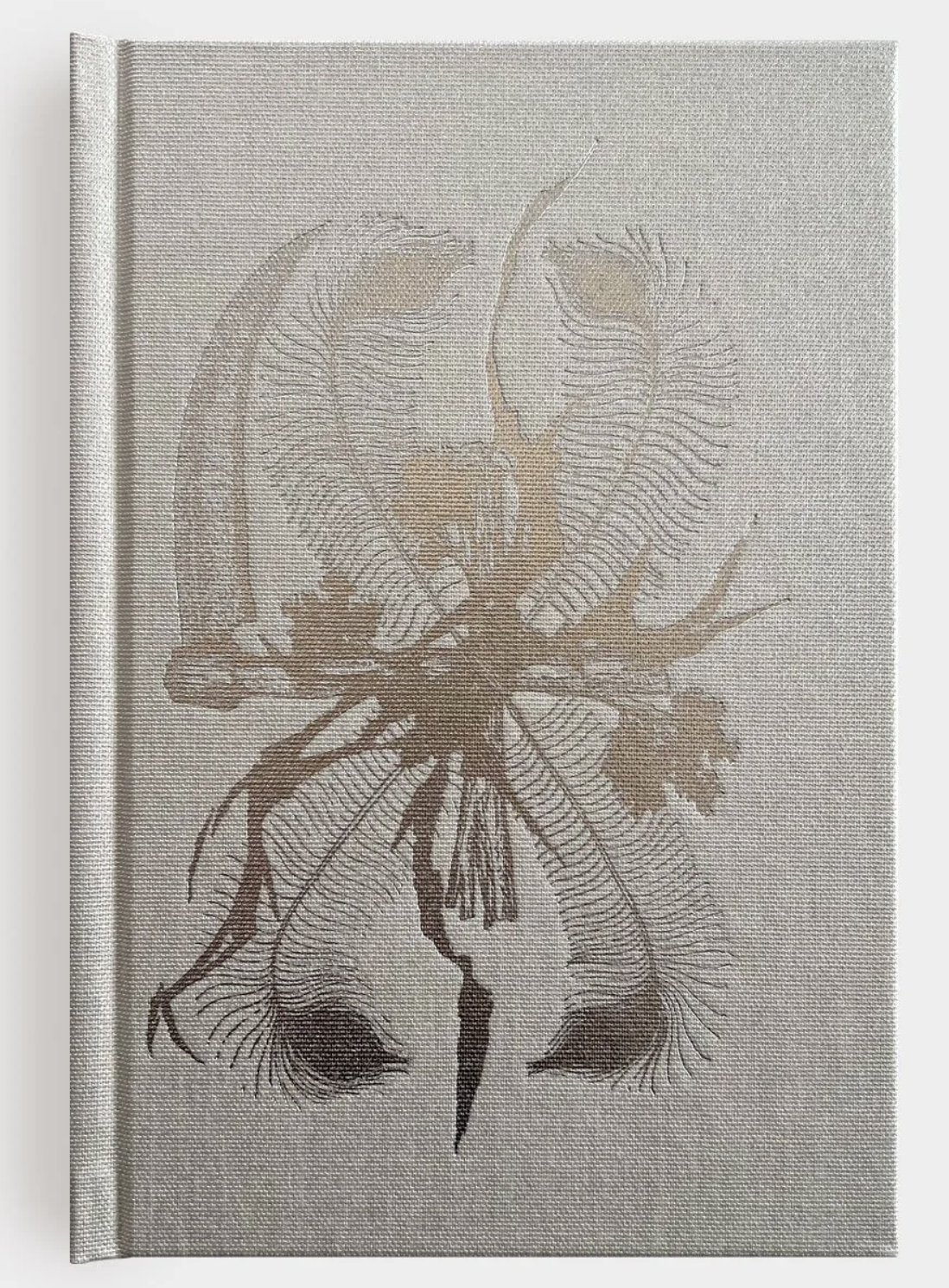
Front cover of the collector’s edition of Yates’ book Arcanum. Published by Anathema Publishing. 2019.
OL: Daniel, between your own writing and publishing efforts, your time in occult communities, and the vantage point that The Occult Library project affords you, what do you feel are some commendable aspects — and pitfalls — of the contemporary occult literary milieu?
DY: I think firstly the various publishers are to be commended for their resilience. The world has changed dramatically in the last 5 years alone, and with that has come several challenges from price hikes across the board, to difficulty with sales as everyone starts to watch their finances that bit closer. I am also pleased to see silent side of the occult community has been voting with their wallet in that so many right-wing leaning texts are going the way of the dodo.
No one can deny that the occult side of fascism has been getting a bit too comfortable with itself for a while now, but I feel that tide is turning. As awareness of the problem grows, I am seeing them shrink away into the background. Whilst we as a library hold to be neutral ground, we do however have a policy of not platforming that kind of content and have successfully investigated and acted on a few instances where the community pointed out texts that had fallen beneath the radar.
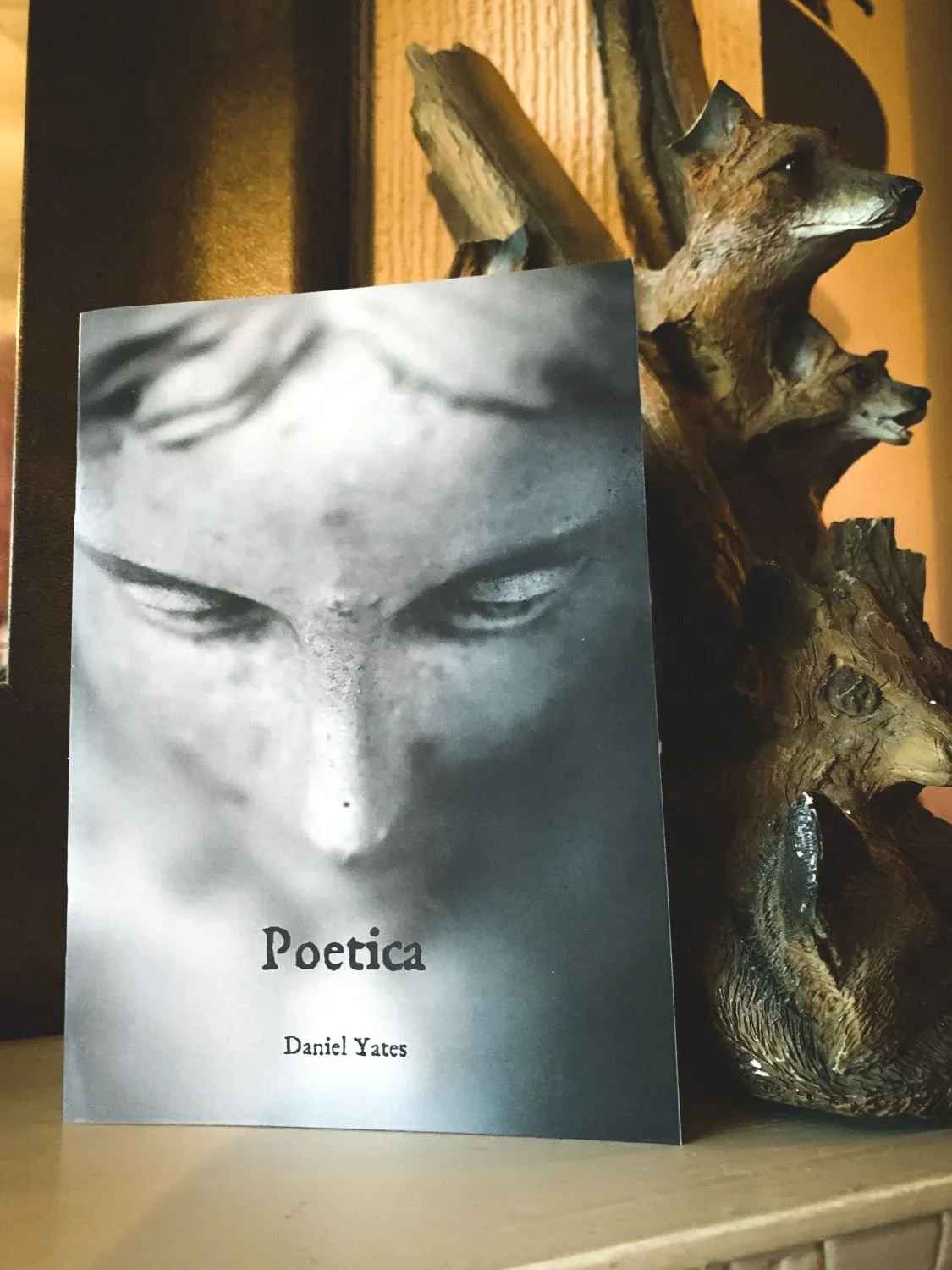
Front cover of the chapbook edition of Yates’ work Poetica.
OL: As The Occult Library has become a fixture in the community, how do you envision the coming year or so regarding project growth, community roles & responsibilities, and access?
DY: I have so many plans for things I want to incorporate and integrate into the site. I want to expand the arena of the art galleries to include a whole section on antiquarian art, I want to begin looking at a poetry section at some point, there is a long term 'mapping' project I am trying to figure out the technicalities of, and there is a still a lot of cataloguing to do to get us up to speed. For my own part progress has been very slow since April this year when I suffered from a heart attack. I have been struggling since and have found it hard to work on the site much beyond the essentials that I have worked on. Regardless, yes there are many plans for the coming year, and they will see the light of day!
OL: Daniel, thanks for taking the time to have this discussion with us today. We look forward to continuing work together, and we hope that your Fall is creative and enjoyable!
DY: My pleasure, lots of work ahead and I am looking forward to getting back in saddle as best I can!
Daniel Yates’ own website, Photophrenic, can be found HERE. There, numerous offerings and information can be found in the way of Daniel’s personal explorations, written & artistic work, and craftsmanship. Daniel can also be found on social media, particularly on Instagram at @danielyates.