A Cauldron Conversation with Ben Pitcher
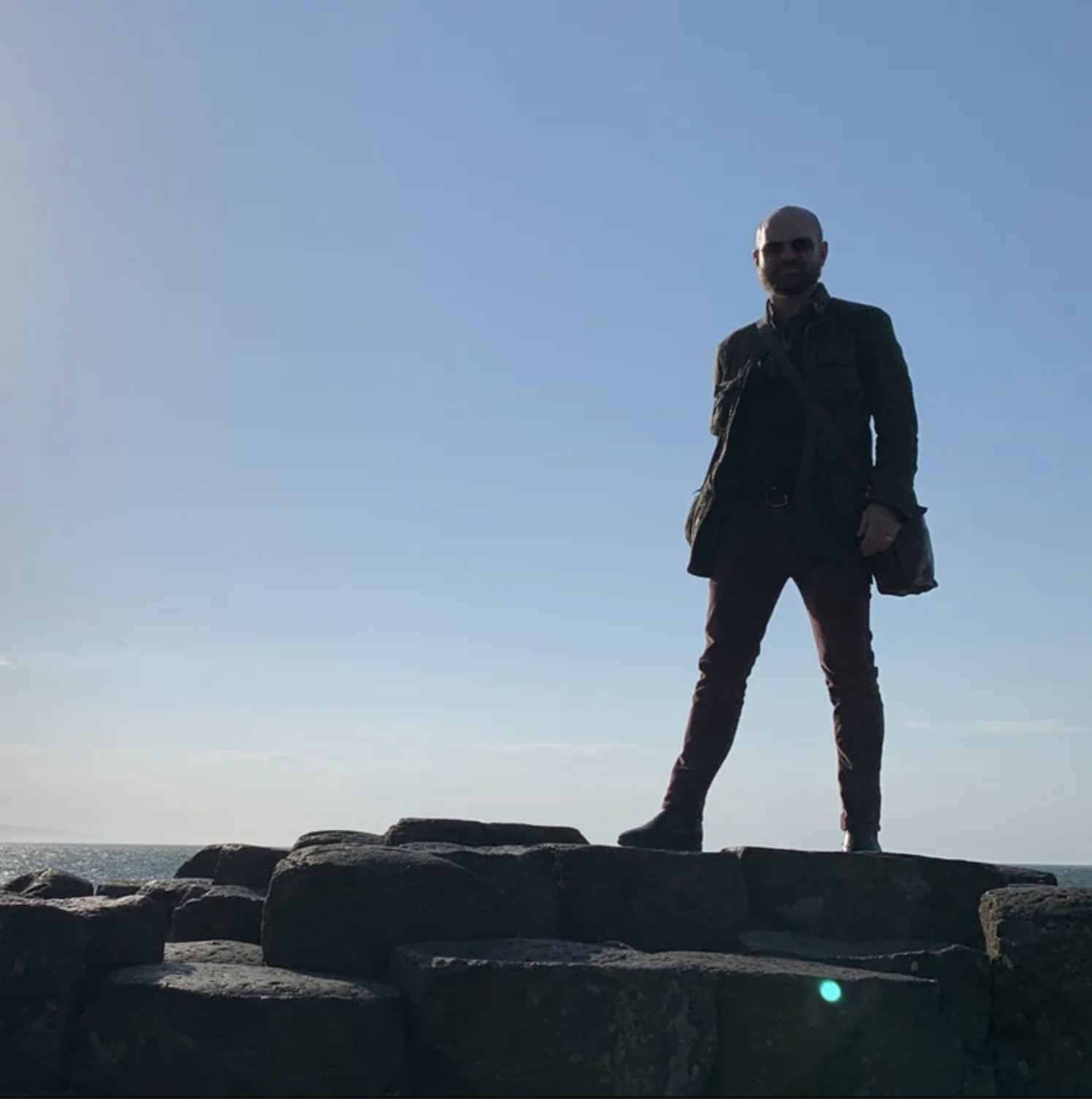
Ben Pitcher
Seeker of the obscure, Fortean, occultist, admirer of high-strangeness, book lover, and positive contributor to the occult community, Ben Pitcher currently works on The Occult Library’s catalog of periodicals and zines. Ben’s work is unique to us in this regard: whereas we chiefly catalog non-physical bibliographic entries and information, Ben has been adjacently collecting physical copies of given materials to work with more closely.
Of primary note, Ben has been laboring diligently to catalog and upload entries for Michael Howard’s legendary pagan and occult journal The Cauldron.
According to The archival site for The Cauldron, the publication:
“...was a non-profit, independent, esoteric magazine featuring in-depth articles on traditional witchcraft, Wicca, ancient and modern Paganism, magic, and folklore. It was published quarterly in the UK in February, May, August, and November between 1976 and 2015. It was founded to cater for pagan witches, giving space in particular to non-Gardnerian traditions of witchcraft and so provided some balance to The Wiccan (now Pagan Dawn), the mouthpiece of the Pagan Front (later the Pagan Federation). During its lifetime The Cauldron was edited by Michael Howard who "has been active among pagans and ritual magicians since the early 1960s."’
The Cauldron was a non-profit, independent, esoteric magazine featuring in-depth articles on traditional witchcraft, Wicca, ancient and modern Paganism, magic, and folklore.
The Occult Library now, thanks to Ben’s work, maintains a wealth of entries for this ongoing project. The ease with which one can subsequently garner information on a given set of Cauldron contents & images is greatly enhanced by Ben’s efforts. Ben’s goal for himself and the library is the collection & cataloging of every Cauldron issue published in the journal’s lifespan.
While The Occult Library does not host full text copies of these issues, we do list the articles and authors — something which, to our knowledge, is not currently being done anywhere else in this sphere.
Today, we sit down with Ben to discuss the genesis of this project, its goals, and the joys of collecting, and explorations into these storied editions.
OL: Hello there, Ben. Great to catch up. It has been a joy working with you, and we are eager to hear more about your experience collecting these incredible artifacts of the pagan and occult community! To start, can you recall your own initial encounters with The Cauldron in ‘the wild?’ Was there a period in your life when this occurred, and what do you feel set the journal apart for you?
BP: Hello, and thank you so much for having me as an interviewee, what a pleasure, considering all the wonderful guests we have had so far!
I'm originally from Australia and have always been close to this particular subject matter, with eternal thanks to my wonderful grandmother, who filled my childhood with ghost stories, myths, legends, and folklore, especially of the Aboriginal Dreamtime. It's not such an easy place to immerse yourself in as Europe is, so when I landed on these shores with my wife nine years ago, I instantly understood the wealth of history and the sheer number of experiences and reading I had in front of me.
I obviously knew about Treadwell’s, Watkins, and Atlantis, but I could also see an explosion of zines flooding the market with brilliant creativity, storytelling, and a respect for history and culture that we often forget is attached to the very core of what we all love this particular sphere for.
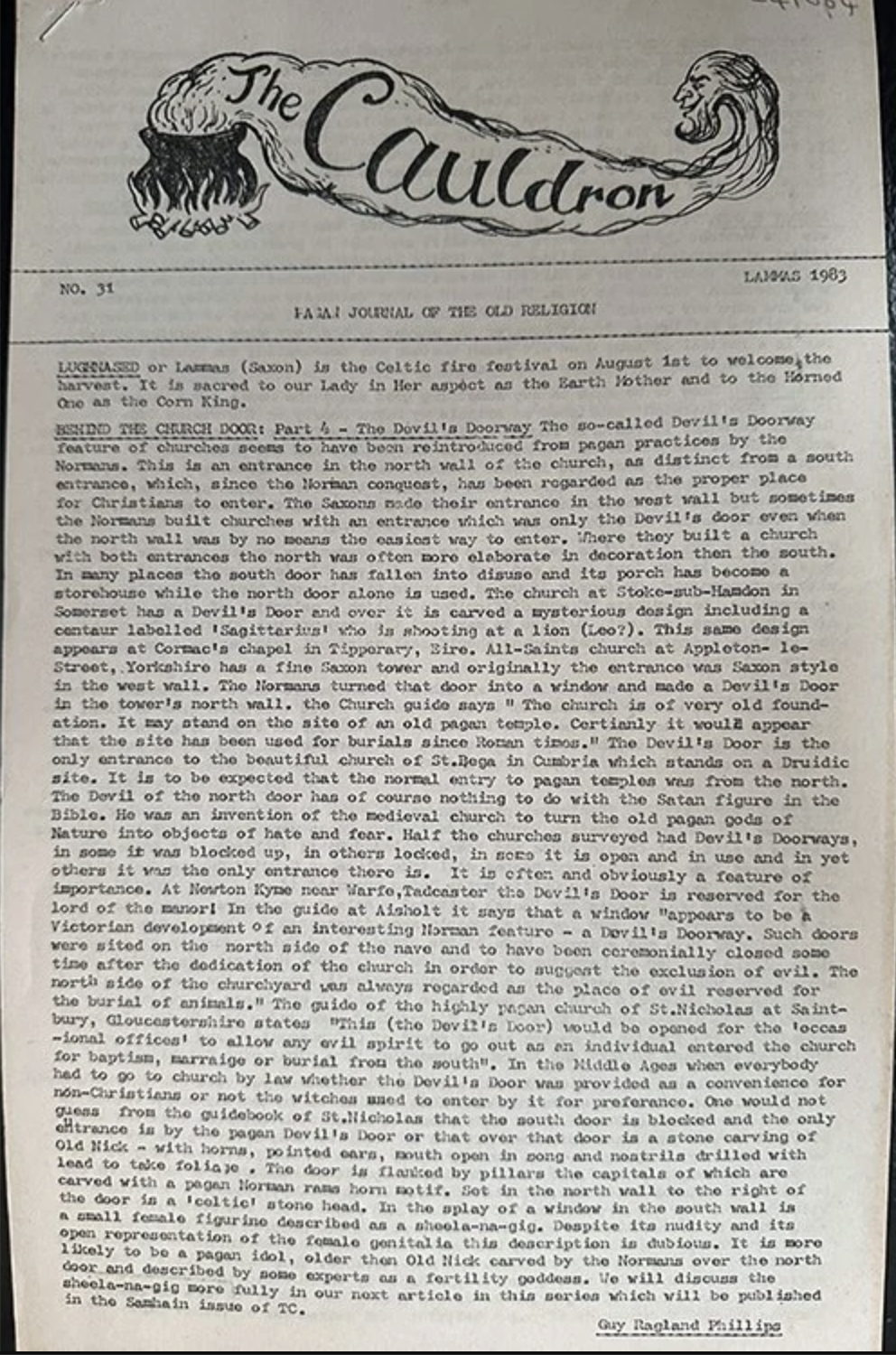
Cover of The Cauldron, No. 31, Lammas 1983.
Anyway, I started with the newer zines, and as I went deeper down the rabbit hole, I began discovering titles like The Occult Observer, Talking Stick, Fiddler's Green, and others. It wasn't until I started reading through the Museum of Witchcraft and Magic website that I came across The Cauldron. I was instantly fascinated and started pestering the usual suspects for copies, it was apparent this wasn't going to be an easy task.
I ended up dropping in to see Geraldine at Atlantis one day, and she was kind enough to help me track down my remaining copies of The Occult Observer. That was my lightbulb moment. I remember asking her, "Do you ever come across Cauldrons, and if so, could we discuss making some purchases?" Geraldine replied (to paraphrase) that it was quite a big task, and she wasn't sure if many people had ever managed to collect the entire run. I was grateful for the heads-up, but it only made me more determined. I knew that day I'd be on the hunt for as long as it would take.
I didn't secure my first copy for about twelve months after that. I simply couldn't win bids or find copies anywhere; it was hugely frustrating. I began a conversation with Daniel Yates, who was very excited that I was going to be brave (or perhaps foolish enough) to invest the time, money, and patience this adventure would demand. Eventually, copies started presenting themselves, though I genuinely feel there was an energy to the whole process, as if I had to prove my commitment before they would appear.
We are well on our way now, with roughly 45 to 50 copies remaining to complete the set for the Occult Library.
OL: One thing you’ve conveyed to us is the sheer wonder and tactile quality of holding an issue of the magazine. What is your assessment of the production quality, and are there any comparable publications currently in print that you can relate the journals to?
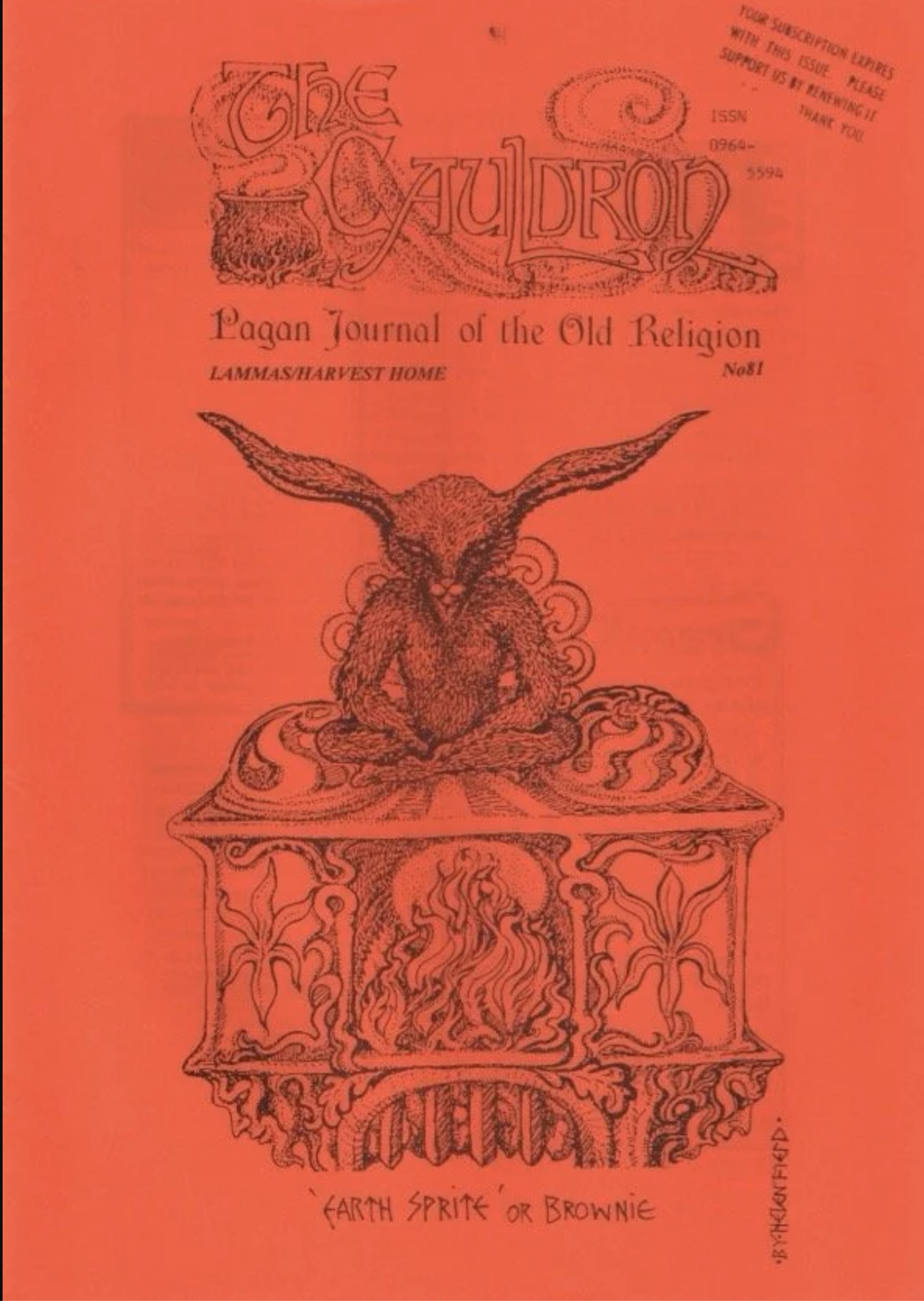
Cover of The Cauldron, No. 81, Lammas/Harvest Home 1996.
BP: Holding copies of this age and character is just wonderful. I can really feel the energy of all the people who have contributed, and the weight of information I'm holding in my hands. The quality is, of course, excellent if the copies have been well looked after, and even those with slight damage are, with great care, still beautiful and perfectly functional in their current state.
Comparable publications is an interesting one. From the same era as The Cauldron, I would point to The Occult Observer, The Lighthouse, Meyn Mamvro, Spectrum, Quest, Folkwitch, The Skeptical Occultist, ASH: The Esoteric Journal of Albion, and the list goes on.
More recent titles would include Fiddler's Green, Hellebore, Airmid's Journal, Conjuration by the Museum of Witchcraft and Magic, Cunning Folk, Sabbat, Hwæt, Weird Walk, Myth & Lore, Strange Days, Grimoire Silvanus and many more that I couldn't rattle off the top of my head.
Please go and check the website for the full list so I don’t forget anybody!
The point is, there is a thriving global community of like-minded people sharing their own vision of what we all find fascinating within this sphere. We celebrate every one of them for putting the time, money, love, and energy into what they do by enriching the wider community's understanding and enjoyment in the process.
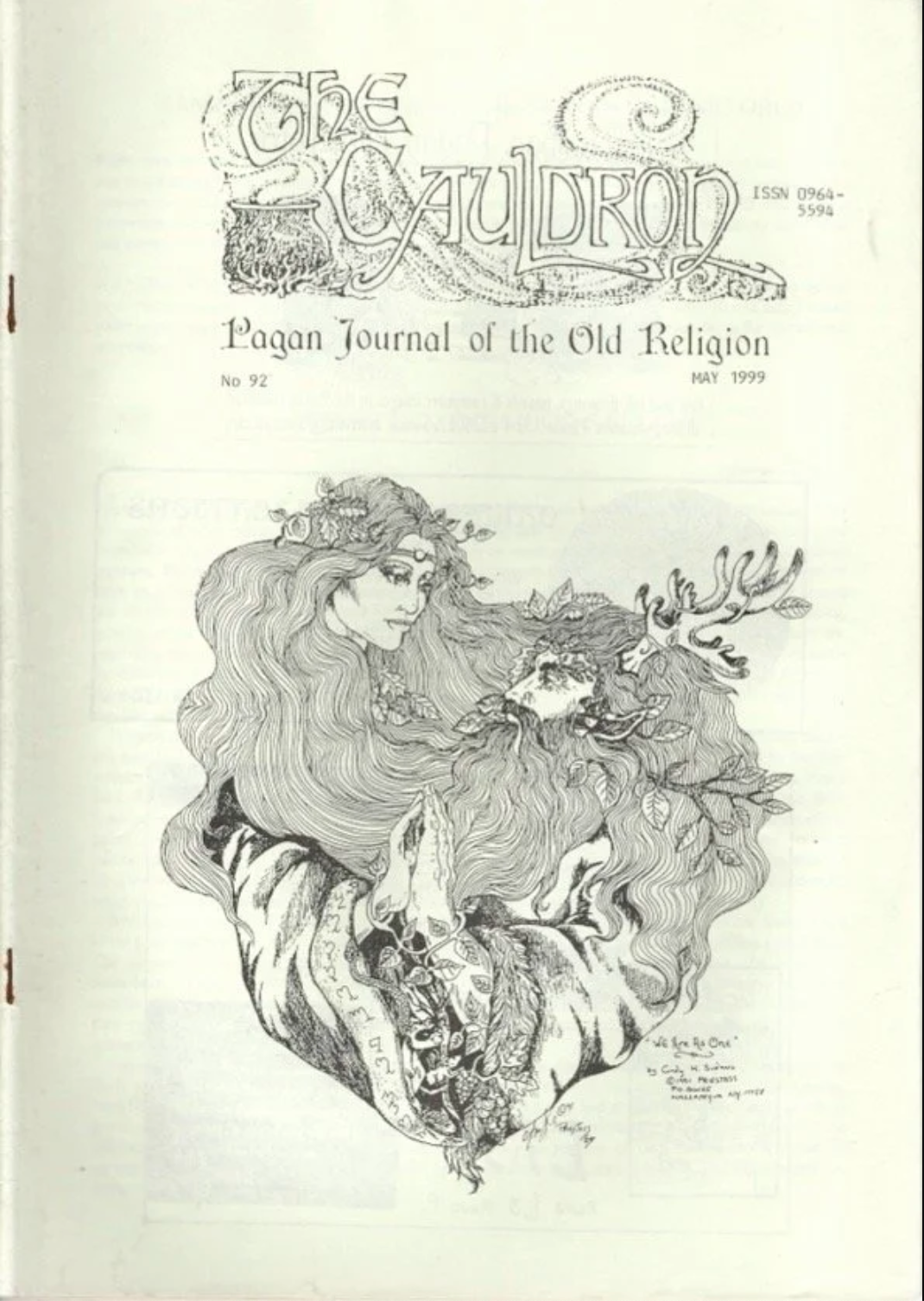
Cover of The Cauldron, No. 92, May 1999.
OL: Our project naturally meshed with your own propensities for collecting and exploring zines, obscurities in ephemera, and unique occult periodicals. Can you describe how the idea of prospectively acquiring every Cauldron issue emerged? Was this already a notion you had considered prior to joining The Occult Library staff?
BP: Honestly, none of this was something I had considered. Daniel Yates and I have been talking for years, following a chance encounter online where we both discovered we each had copies one and two of the Complete Mystical Records of Dr. John Dee by Llewellyn. That is how our friendship began.
Over the years we got talking about collecting books, zines, and the like, and then the conversation turned to how one might ever share these things with the wider community. Daniel mentioned that I had built a wonderful collection, and I started asking him what else I should be searching out. This all happened around the same time as my conversation with Geraldine at Atlantis, and the rest, as they say, is history.
I really did it purely for the love of the hunt, spending my time and money preserving a history that the general public would not ordinarily care to know about, and doing my bit as a dual British citizen to honour the people, places, and communities that I truly believe make this country such a wonderful place to be. There are so many remarkable communities quietly thriving beneath the surface of the UK that are not acknowledged or celebrated as they deserve to be. My way of tipping my hat to them, of showing my support and respect, is by doing what I can to collect, protect, and share what belongs to all of us collectively. Good vibes only here.
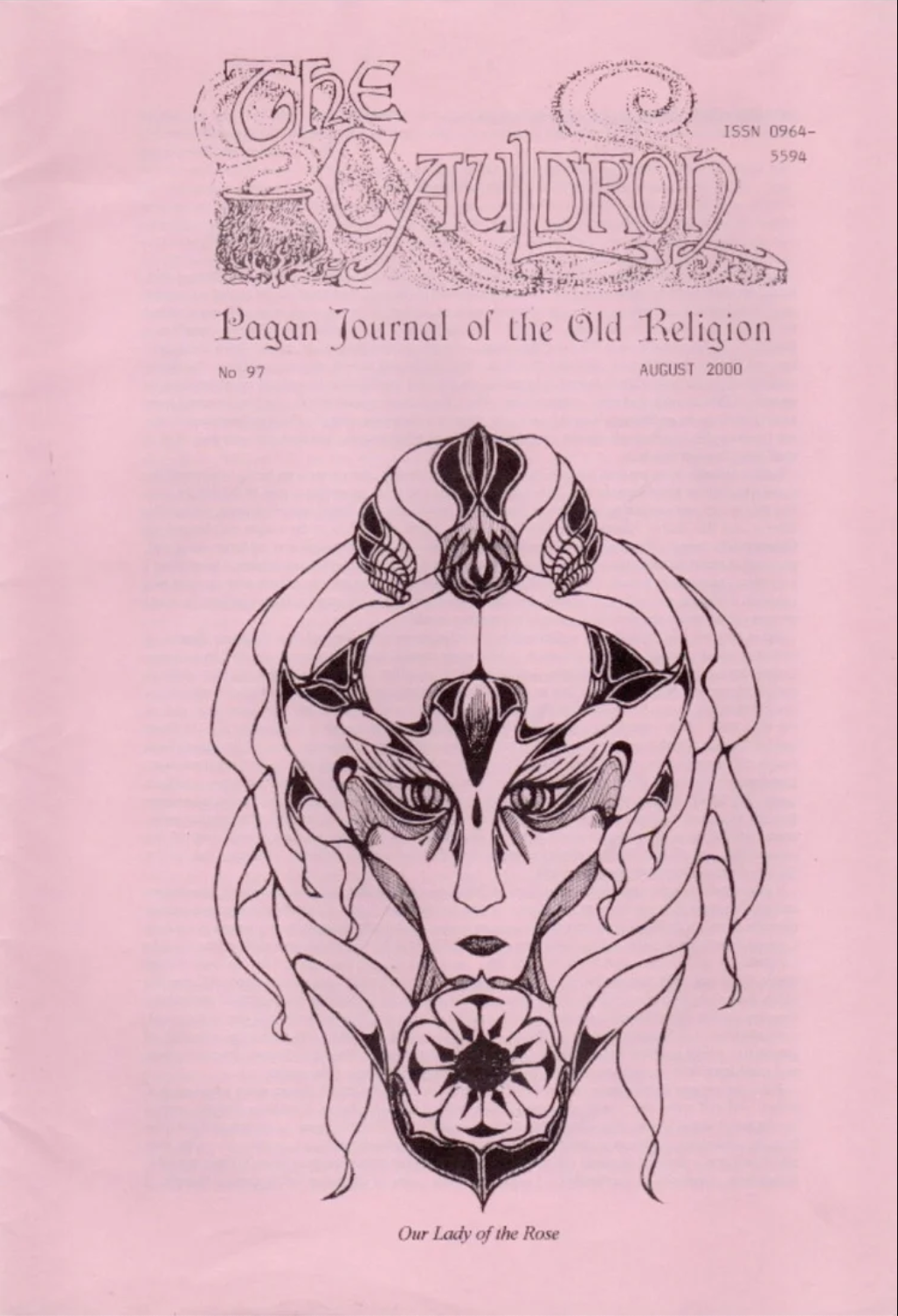
Cover of The Cauldron, No. 97, August 2000.
OL: Insofar as the actual process of bibliographic cataloging is concerned: you must, by now, be familiar with the patterns, trends, topics and authors of the publication in a way few have been from this perspective. Does anything catch your eye in the way the publication reflects the atmospheres of different decades, periods, movements, and so forth?
BP: I have certainly been pouring through these copies, though it really does take time and concentration because there is so much to absorb — right down to the finest details in the back pages, where you find old addresses for publishers, zines that may have only run for a handful of issues, bookshops, healers, readers, covens, and mystics advertising their activities. It is a remarkable snapshot of a world in motion.
One thing I have noticed above all else is the extraordinary diversity of people who contributed. Looking back now, it is striking to see how well known many of those names have become, when at the time they were likely only just finding their feet. I never had the pleasure of meeting Mike Howard, but I can say with confidence that he gave a truly wonderful platform to those who were given the opportunity to share, debate, and communicate with the community.
What I most admire is that there has always been an underlying thread running through the publication — a commitment to protecting culture, thought, and knowledge from different communities, and to cultivating conversation in a space that felt safe and respectful, even when, as you can occasionally sense between the lines, things got a little heated.
The sheer length of time this journal ran is a testament to its editor, its contributors, and to everyone who values honest, open exchange across all walks of life. It demonstrates that even in disagreement, we can learn something from one another and engage with genuine respect. You are never too old or too knowledgeable to discover something new.
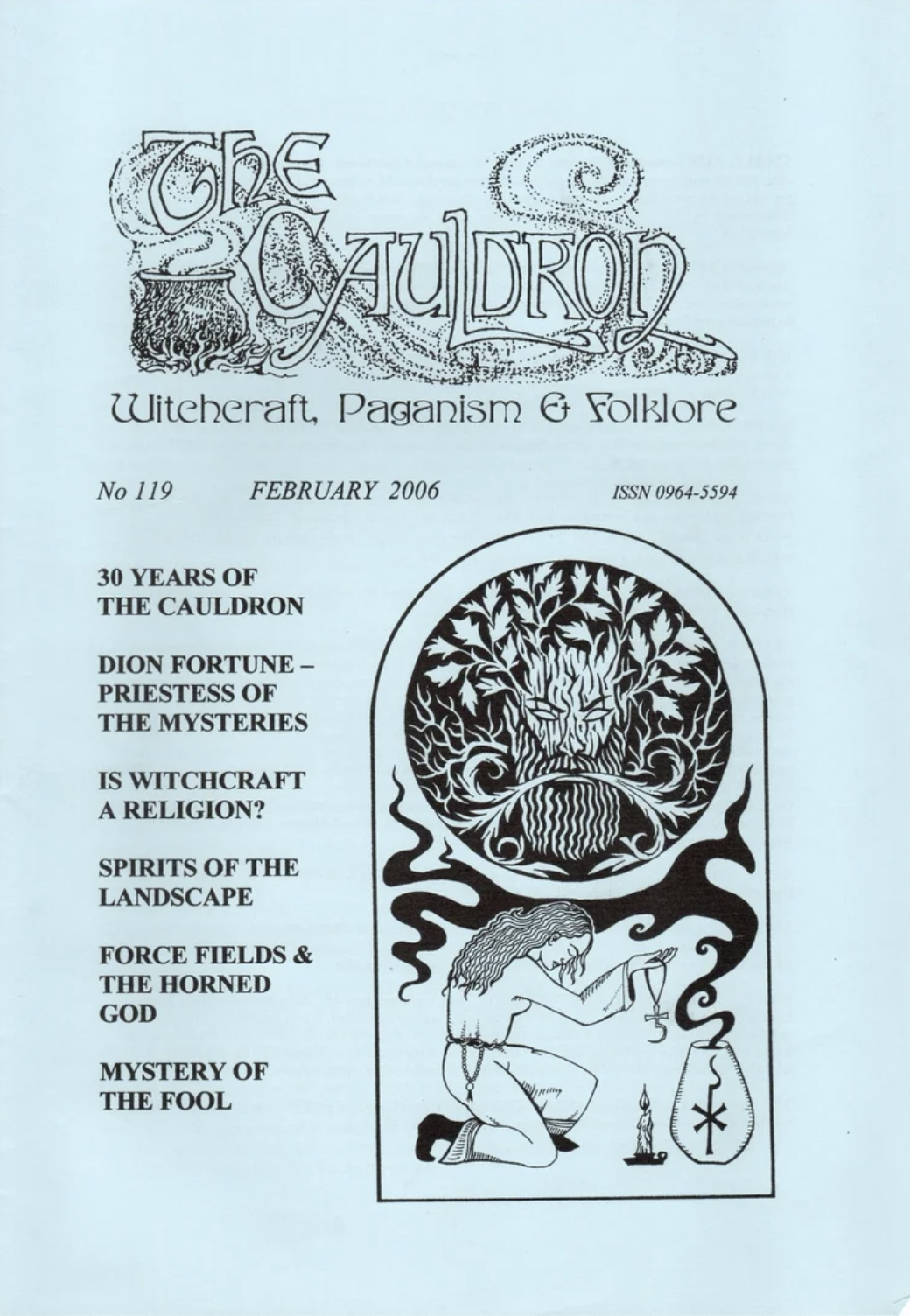
Cover of The Cauldron, No. 119, February 2006.
OL: With the previous question in mind, is there an article or two that you can point to as having stuck out to you for a particular reason? Perhaps the same goes for the art that adorns each issue?
BP: What a question! Having worked through all of these issues, there are naturally a few that have lodged themselves in the memory. For me, the earlier issues, number 40 and below, contain some incredible material. A few that spring immediately to mind are Cecil Williamson's piece on Gardner's Book of Shadows from Lammas 1984, and Dusty Miller's “What is the Old Religion?” from Lammas 1983. Moving into the later issues, Andrew D. Chumbley's “The Cult of the Divine Artist” from the Lammas/Autumn Equinox issue of 1995 is remarkable, as is Professor Ronald Hutton's “The Witch in History” from Hallows/Yule 1997. Graham King's piece on the Museum of Witchcraft from August 2001 is wonderful, and I would also highlight Shani Oates' “The Wisdom of Courtly Love” from February 2004, Melissa Seims on “Charles Clark — Gardnerian High Priest and Child of the Wica” from May 2005, Tracy Bovey's “Weird Tales of Dartmoor” from May 2011, and Daniel A. Schulke's “Diablo Stigmata: The Devil's Mark.” There are many, many more, but these are the ones that come to mind first.
As for the artwork, I love watching the transition of the headers across the early issues before the introduction of the larger format cover art. They did evolve, so it is well worth keeping an eye on that journey. Among the larger format covers, some personal favourites have been issues 87, 100, 116, 128, and 148, though I want to be clear that this is in no way a ranking. The cover art across all these issues is creatively on point, and each one carries exactly the character and atmosphere the issue deserves.
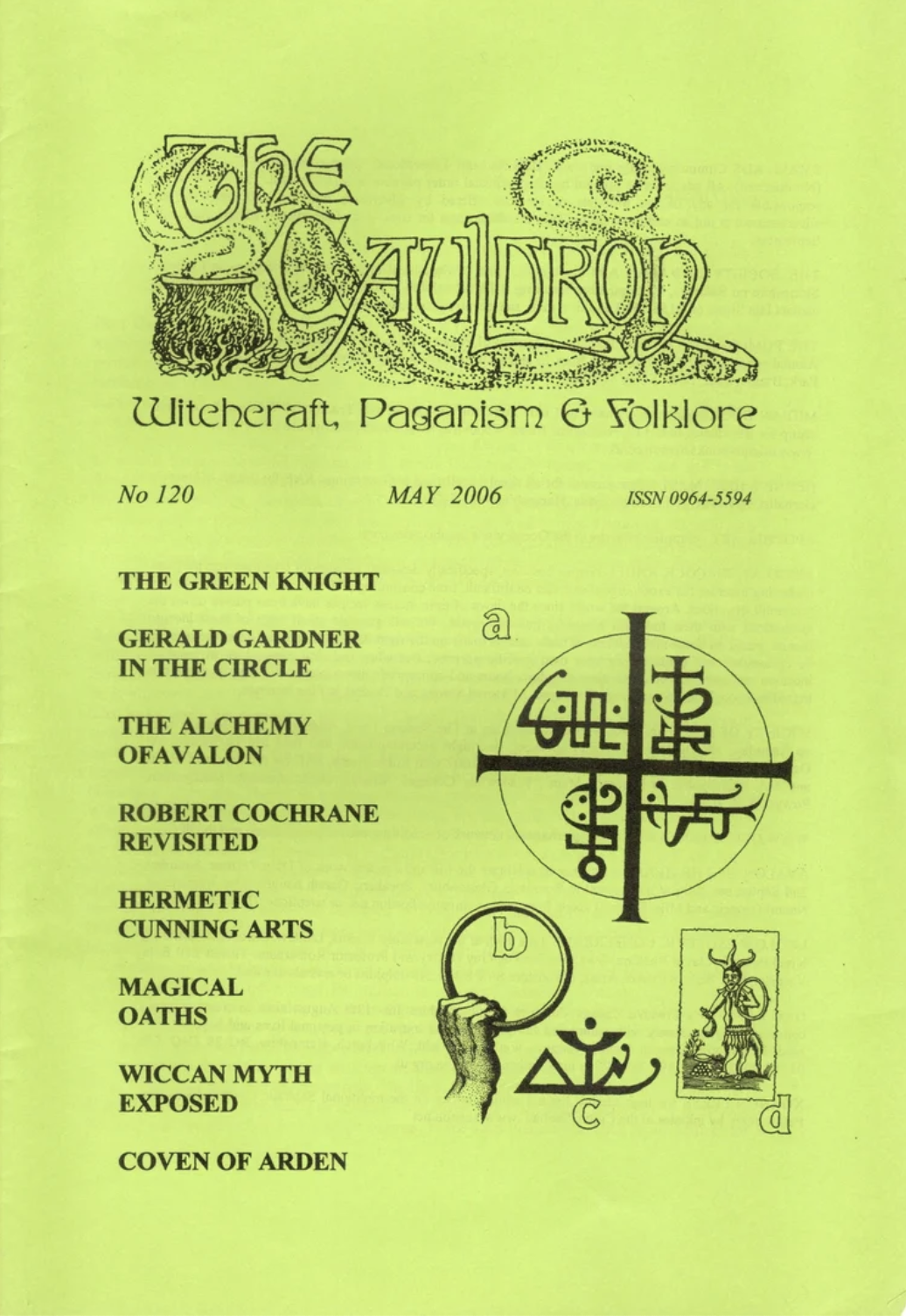
Cover of The Cauldron, No. 120, May 2006.
OL: As many librarians and collectors know well, there is a thrill in both the hunt and the acquisition. Yet, there is also the joy of community and connection that is bound up in this work. As we’ve discussed among our staff, this journey has led you to many fascinating and fruitful conversations with companions and interlocutors. Do you feel this is a vital part of any bibliographic journey?
BP: Yes, without a doubt. We may pass one another in the street, we may judge on appearances as is the human condition, and we may make incorrect assumptions when first meeting someone. But what we don't do is miss the signals and markers when a conversation turns to something as rare and specific as The Cauldron. I'm quite sure most people wouldn't expect me to start talking about these topics, and that's perfectly fine. What I love is the moment when everyone realises they are on the same page, sharing the same interests, the conversation opens up, the energy shifts, and many wonderful friendships have begun in exactly that way. It is a truly special feeling to set out on what feels like a personal journey, only to find it has become a shared one along the way.
I would especially like to acknowledge both Danny Scopelliti and the wonderful Daniel Yates. What a joy it has been to bring you into my sphere as friends and colleagues, and I hope I have found a place in yours in return. A perfect case in point would be my conversations with Alex Langstone, who has been an absolute gem and an unlikely — and somewhat accidental — mentor, perhaps without even realising it. He was so generous when I first approached him about his early zines, and his excitement at connecting with someone who had found the same love he had discovered so many decades ago was genuinely touching. A heartfelt thank you to him. The wonderful Gemma Gary has also shown me great kindness in my endeavours recently, and I will always be grateful for that.
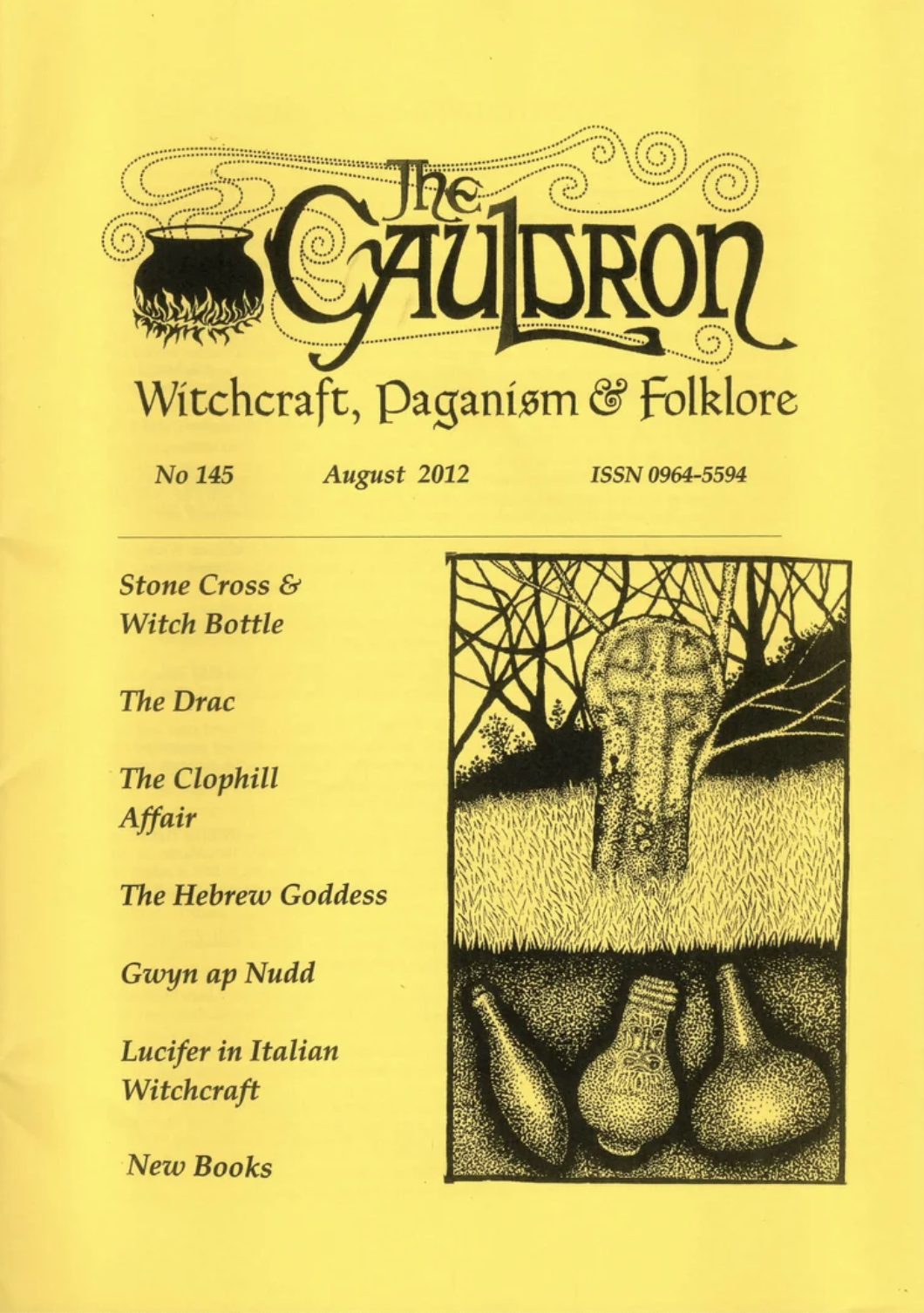
Cover of The Cauldron, No. 145, August 2012.
OL: Finally, we ask: when this project comes to a close, or fully realizes its potential, do you have a vision for how you’d like to expand your work with The Occult Library? Is there another publication you’d like to pursue, or do you foresee a well-deserved rest occurring in due time?
BP: The first step is completing the hunt. After that, we will thoughtfully work out what we can and cannot reasonably do next, always with a view to honouring the intellectual property of The Cauldron and respecting the wishes of Mike Howard.
I would love nothing more than to make the full collection available to the wider community, but that is unlikely to be straightforward in the near term. I think the best we can do for now is complete the set, catalogue the covers, articles, and contributors, and then perhaps, with a little magic, find a different and mutually agreeable way to share these with the world once again.
As for my next mission? I have my eye on Spectrum, along with a few other titles I have in mind, but that, I'm afraid, is a story for another day.
OL: Ben, thank you for taking the time to speak to us today. Thank you also for your incredible contribution to The Occult Library project, and the greater occult community. We look forward to ongoing work together!
BP: Thank you so much for having me. It’s an absolute pleasure to be working with you all and meeting so many along the way. As my dear friend and mentor Sam Cutler would say — Onwards and upwards.
— BPxx
Ben can be found on Instagram at @obscurahunter.
The Occult Library’s entire bibliographic archive of The Cauldron can be found HERE. Many thanks to Ben for his time and dilligent efforts!